




BLOGSDETAILS
Baghouse Filter System Design Guide
Author:hanzhe Time:2026-10-14 21:46:57 Click:89
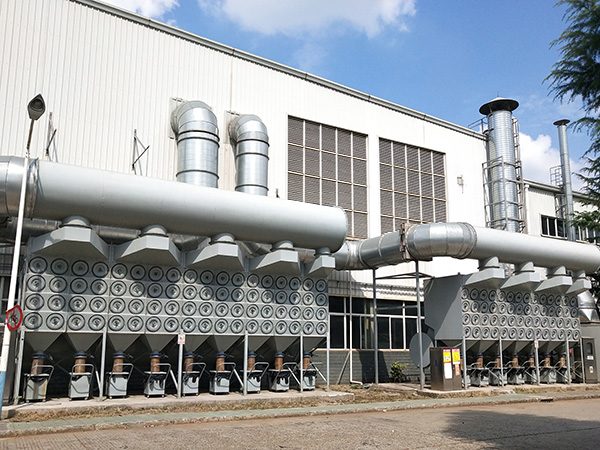
A baghouse filter system is a fabric filtration installation sized to a specific gas stream and dust. Designing one is a sequence of linked decisions: the airflow and dust data set the filter area, the filter area and layout set the housing, and the housing geometry sets how well the dust actually collects and discharges. The overview of what a baghouse is appears in the companion article on baghouse dust collectors; this guide is about the design parameters that make one perform.
Design Inputs You Need First
Design begins with data, not with a vessel size. The inputs are the gas flow rate corrected to the operating temperature and pressure, the inlet dust loading, the particle size distribution, the gas temperature and moisture, the dust bulk density and flowability, any corrosiveness, and whether the dust is combustible. Peak and average conditions both matter, because designing only to the average leaves no margin for the worst part of the cycle.
Air-to-Cloth Ratio
The air-to-cloth ratio is the airflow divided by the total filtration area. It is the single most influential design number. A lower ratio means gentler filtration, lower pressure drop and longer media life; a higher ratio gives a smaller, cheaper housing that runs harder and cleans more often. The appropriate ratio depends on the dust — fine, sticky or high-loading dust needs a lower ratio — and on the cleaning method. Selecting it conservatively for difficult dust is usually cheaper over the life of the plant than recovering a unit that was sized too tightly.
Filter Area, Bag Count and Compartments
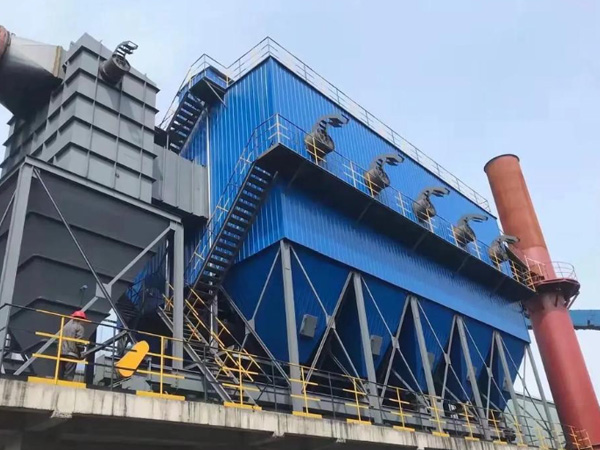
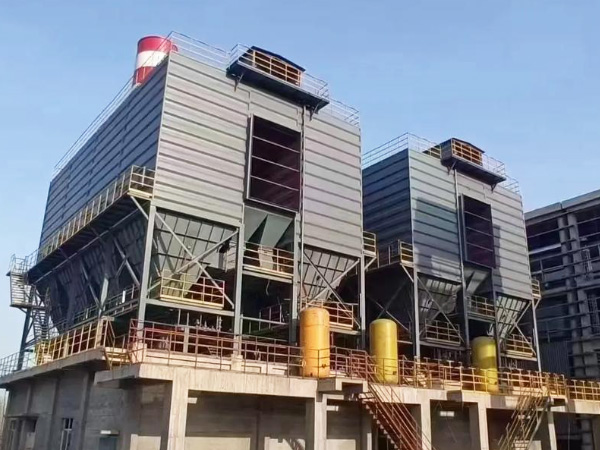
Filter area follows directly from the airflow and the chosen ratio. From the area, the number of bags, their length and the tube sheet layout are derived. Dividing the housing into compartments serves two purposes: it allows section isolation for maintenance or off-line cleaning, and it limits the volume affected if a bag fails. Compartmentalization also supports future capacity additions if the layout is planned for them.
Can Velocity and Tube Sheet Layout
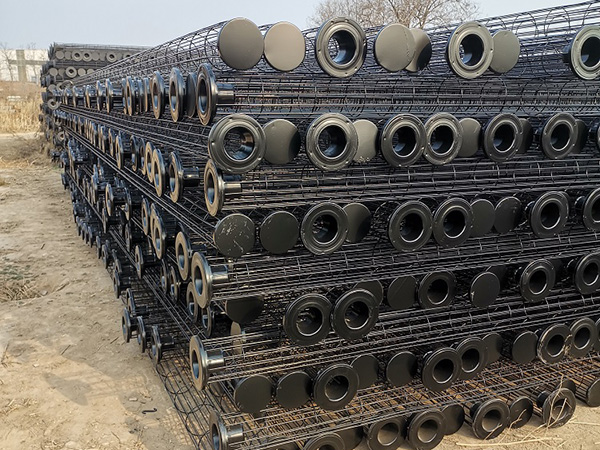
Can velocity is the upward gas speed inside the filter cage or tube. If it is too high, coarse or re-entrained dust is carried back up into the cleaned gas rather than falling to the hopper. Controlling can velocity through tube sheet spacing, cage design and inlet distribution is a quiet but important design lever, especially with coarse or high-loading dust. The relationship between these parameters and the housing geometry is why baghouse design is treated as a system rather than a parts list.
Inlet Design and Air Distribution
How the dirty gas enters the housing determines whether dust is distributed evenly across the bags or piled onto the first row. Poor inlet design causes localized high loading, uneven cleaning and premature bag failure on one side. Baffles, plenums or a pre-separator upstream reduce the velocity at entry and drop out the largest or hottest particles before they reach the media. For high-temperature or coarse particulate streams, this protection is often what keeps the bags alive.
Hopper Design and Discharge
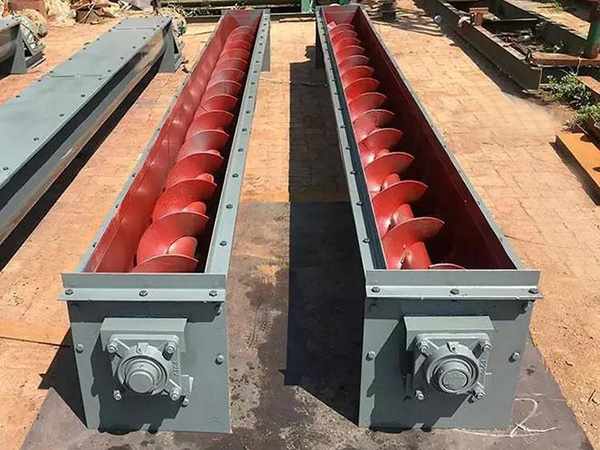
The hopper collects dislodged dust and must move it out before it re-entrains. Practical design points are adequate slope for the dust's angle of repose, sufficient volume to avoid bridging, and a discharge path that keeps up with the collection rate. A rotary airlock valve maintains the pressure seal while discharging, and a screw conveyor transfers the dust away. Hopper heaters or insulation may be needed where moisture and temperature could cause condensation or caking. A hopper that cannot discharge turns a filtration problem into a structural and emission problem.
Cleaning System Configuration
For pulse jet baghouses, the cleaning design covers the pulse pressure and reservoir, the pulse jet valves and blowpipes, and the cleaning sequence across rows or compartments. The sequence should be matched to the dust and load — demand-based cleaning for variable processes, compartment cleaning where re-entrainment is a concern — and the media must be specified to release its cake at the chosen pressure. Cleaning design interacts with efficiency and is covered in the article on pulse cleaning and efficiency.
Fan and Pressure-Drop Budget
The fan must deliver the required airflow against the total resistance: clean-media resistance, cake resistance at the design loading, ductwork and any discharge equipment. The pressure-drop budget should be built up from these components rather than guessed, and the fan selected with margin but not so much that it runs off its best efficiency point. A variable frequency drive lets the fan track demand as the cake resistance changes between cleaning cycles.
Materials and Temperature Limits
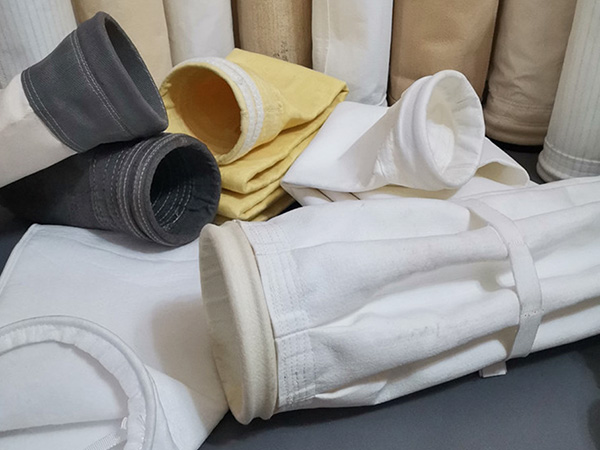
Housing and bag materials are selected from the gas temperature and chemistry. Standard fabrics cover a defined temperature range, with higher-temperature media available for hotter streams; the housing, cages and seals must match as well, and thermal expansion must be allowed for in the layout. Where the gas is corrosive or moist, coatings and material upgrades protect the structure and the media support.
Safety and Compliance Provisions
For combustible dust, design includes deflagration venting, isolation between connected equipment, spark control upstream, and conductive construction and grounding. These are not add-ons but part of the layout, because a vent only works if the rest of the connected system is isolated. The applicable requirements depend on the material and jurisdiction and should be defined during design, not retrofitted.
Commissioning and Verification
A baghouse should be commissioned against measured baselines: differential pressure at clean and loaded conditions, airflow, cleaning performance, hopper discharge and, where required, emission testing at designed sampling points. Re-verifying these over time is how gradual drift — worn cages, changing dust, failing cleaning — is caught before it becomes a compliance or downtime event.
FAQ
What is the most important parameter in baghouse design?
The air-to-cloth ratio, because it links airflow and filter area to pressure drop, cleaning frequency and media life. It is selected from the dust characteristics rather than from a universal figure, and getting it wrong is difficult to correct later without adding filter area.
Why does inlet design matter in a baghouse?
Because uneven inlet flow loads some bags far more than others, causing localized high pressure drop and early failure. Baffles, plenums or a pre-separator smooth the distribution and protect the media, particularly with coarse, hot or high-loading dust.
How does hopper design affect performance?
A hopper that cannot discharge or that allows re-entrainment returns collected dust into the gas stream, raising the load on the media and risking emission and structural issues. Adequate slope, volume and a discharge path that keeps pace with collection are essential, not optional.
Can a baghouse be expanded after installation?
Often, if the original layout allowed for it through compartmentalization and spare tube sheet area or space. Retrofitting capacity into a fixed housing is more difficult, which is why future demand should be considered during the initial design.
How do I choose the right filter bag material?
From the gas temperature, moisture, chemistry and the cleaning intensity applied. Standard fabrics cover general duty within a defined temperature range, while higher-temperature or chemically aggressive streams require upgraded media and compatible cages and seals. The media should be matched to the cleaning pressure so the cake releases cleanly.
References
U.S. Environmental Protection Agency, Air Pollution Control Technology Fact Sheet: Fabric Filter (Baghouse), EPA Air Pollution Control Technology Fact Sheet series.
ACGIH, Industrial Ventilation: A Manual of Recommended Practice for Design, current edition.
Cooper, C.D. and Alley, F.C., Air Pollution Control: A Design Approach, Waveland Press.
Perry, R.H. and Green, D.W. (eds.), Perry's Chemical Engineers' Handbook, McGraw-Hill, gas–solid separation and filtration sections.
National Fire Protection Association, NFPA 652: Standard on the Fundamentals of Combustible Dust, current edition.
Conclusion
The technical problem in baghouse design is that every parameter is coupled to the next. Gas flow and dust data set the filter area through the air-to-cloth ratio; the area sets the tube sheet and compartments; the geometry sets can velocity and inlet distribution; and the hopper and discharge decide whether collected dust leaves or returns. Fan size, cleaning configuration and material selection all follow from these.
The considerations that determine a good design are the quality of the input data, a conservative air-to-cloth ratio for difficult dust, even inlet distribution, a hopper that discharges reliably, a cleaning system matched to the media, and safety provisions designed in from the start. The practical value of getting these right is stable pressure drop, longer bag life and lower operating cost, rather than a small housing that has to be fought constantly.
If you are designing or re-rating a baghouse, send the gas flow, dust data, temperature and any compliance limits. Our engineering team at Hanzhe Environmental Protection will review the design parameters and flag the assumptions that need confirming. The relevant hardware, including the baghouse dust collector range, filter bags and cleaning components, is listed in the product centre.
 HOT PRODUCT
 CONTACT US