




BLOGSDETAILS
What Is a Baghouse Dust Collector? A Complete Guide for Industrial Dust Control
Author:hanzhe Time:2026-09-17 21:59:08 Click:74
In nearly every plant that cuts, grinds, conveys, mixes, or combusts material, the air quickly becomes a workplace hazard. A baghouse dust collector is the most widely deployed engineered solution for capturing that dust at the source, separating it from the airstream, and exhausting clean air that meets modern environmental and occupational safety requirements. For procurement teams, plant engineers, and EPC contractors, understanding how a baghouse works, what components matter, and which design choices affect long-term operating cost is the difference between a system that runs quietly for a decade and one that becomes a maintenance burden.
This guide walks through the technology in a practical, B2B-oriented way. It explains the operating principle, breaks down the components inside a typical unit, compares the three main cleaning methods, and outlines the technical and commercial factors you should weigh when specifying or purchasing an industrial baghouse for your facility.
What Is a Baghouse Dust Collector?
A baghouse is an industrial air filtration system that uses fabric filter media — arranged as cylindrical bags or pleated cartridges mounted inside a sheet-metal housing — to separate particulate matter from a dust-laden airstream. Dirty process air is drawn into the housing, particles are captured on the filter surface, and cleaned air passes through the media and exits through an outlet. Periodically, the accumulated dust cake is dislodged from the filters and falls into a collection hopper for disposal or recovery.
Baghouses sit in the middle of the industrial dust collection market. They handle higher temperatures, heavier dust loads, and a wider range of particle sizes than cartridge collectors, and they are typically more cost-effective at scale than wet scrubbers or electrostatic precipitators when the duty involves dry, combustible, or fine dust. Industries that rely on baghouses include cement, steel and foundry, woodworking, grain and feed, mining and mineral processing, pharmaceutical and chemical manufacturing, asphalt production, power generation, and food processing.

How Does a Baghouse Dust Collector Work?
The working principle of a baghouse is filtration combined with periodic self-cleaning. The cycle has six recurring steps:
Dusty air enters the housing. A fan or induced-draft blower pulls contaminated air from the process through capture hoods and ductwork into the baghouse inlet.
Larger particles drop out. An inlet baffle or pre-separation chamber slows the air abruptly, dropping coarse particles into the hopper before they reach the filters.
Air passes through the filter media. The remaining dust-laden air flows through the fabric bags. Particles are retained on the outside of the bag while cleaned air passes to the inside and up into the clean-air plenum.
A dust cake forms. Within minutes, a thin layer of compacted dust — the "cake" — builds on each bag. Far from being a problem, this cake actually improves filtration efficiency by capturing finer particles that the bare fabric would let through.
Cleaning cycle activates. When the pressure drop across the filters reaches a preset value, a cleaning pulse or cycle dislodges the cake. The dislodged material falls into the hopper below.
Clean air exits. The filtered air leaves through the outlet stack, often to be recirculated into the workspace or exhausted to atmosphere in compliance with local emission standards.
The key engineering insight is that cleaning happens section by section. In a well-designed pulse-jet baghouse, the cleaning pulse lasts only a fraction of a second and the collector never fully stops filtering. That continuous operation is why baghouses have become the workhorse of industrial dust control for plants that run around the clock.
Main Components of a Baghouse Dust Collector
A baghouse is more than a box of bags. Each component influences performance, maintenance cost, and service life. Understanding what each part does makes it far easier to compare quotes and evaluate competing designs.
Filter Bags and Cages
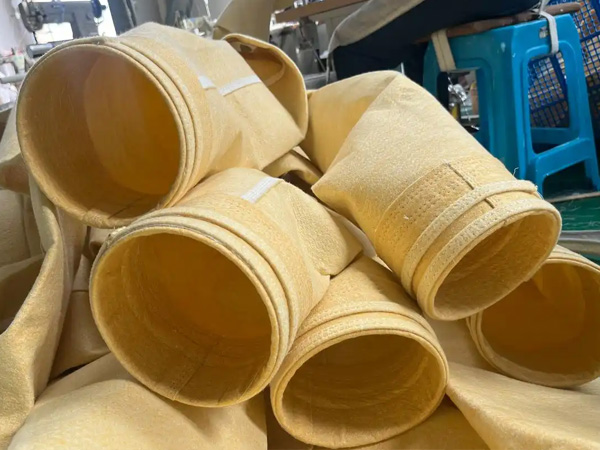
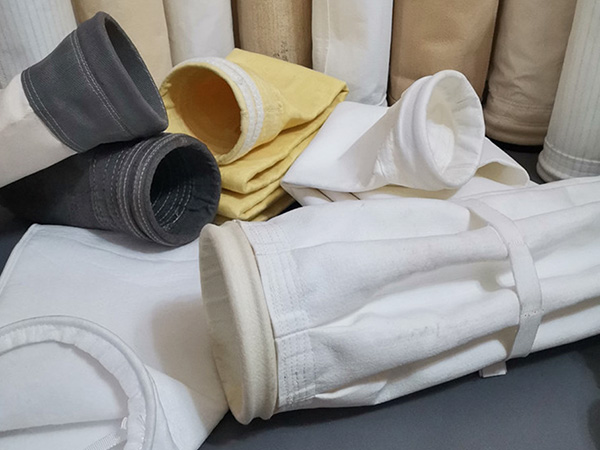
Filter bags are the heart of the system. Most industrial baghouses use long, cylindrical bags made from needlefelt polyester, polypropylene, acrylic, aramid (Nomex), polyimide (P84), or fiberglass, often with a surface treatment such as PTFE membrane, oleophobic coating, or antistatic finish. The right media depends on temperature, moisture, chemical exposure, and dust characteristics. Media selection deserves its own detailed treatment because a wrong choice here is the most common cause of premature bag failure in the field.
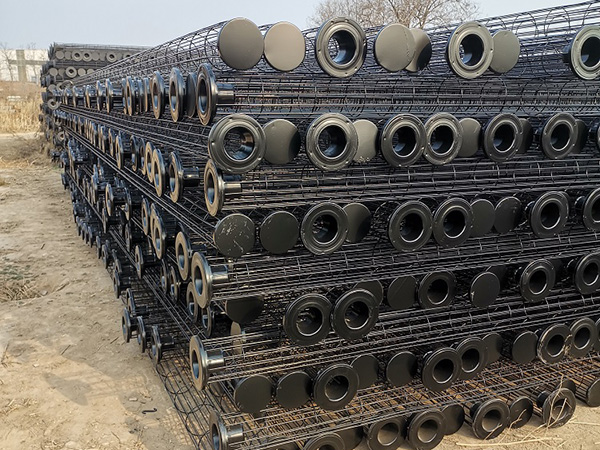
Each bag is supported internally by a wire cage (also called a filter cage or bag cage). The cage keeps the bag open against the negative pressure of the airstream so the full filter area is available. A bent or corroded cage will wear through a bag quickly, which is one reason experienced buyers order the bag and cage as a matched set rather than as separate commodity items.
Housing and Tube Sheet
The housing is the welded carbon-steel or stainless-steel enclosure that contains the filters and separates the dirty-air side from the clean-air side. The tube sheet is the dividing plate that the cages and bags are mounted on. Proper sealing at the tube sheet is critical — any air bypass here is unfiltered air that escapes directly to the exhaust.
Hopper and Discharge
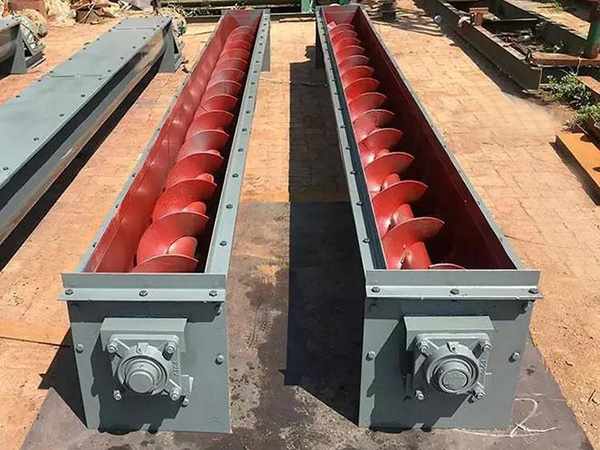
The hopper is the funnel-shaped bin at the base of the housing that collects the dislodged dust. A properly designed hopper has steep enough sidewalls to prevent dust bridging, often with a vibrator or aeration pads to keep material flowing. At the bottom, a rotary airlock valve, screw conveyor, or double-dump valve meters the dust out for disposal, recycling, or downstream conveying without letting air leak back into the housing.
Cleaning System
The cleaning system is the mechanism that removes the dust cake. The three common technologies — pulse jet, reverse air, and mechanical shaker — are covered in detail in the next section. Cleaning components include the pulse jet valve, diaphragm, solenoid coil, blow pipe, timer or differential pressure controller, and compressed-air reservoir. A pulse valve that does not fire correctly is one of the most common field-service issues and the reason a small stock of spare valves pays for itself quickly.
Fan and Ductwork
The fan or blower provides the energy to move air through the system. Sizing is critical: too little airflow and capture is poor, too much and pressure drop is excessive, energy bills climb, and filters wear prematurely. Capture hoods, ductwork, and the fan must be designed as a single system, not as separate purchases.
Control Panel
A modern baghouse runs on a PLC or dedicated timer board that monitors differential pressure across the filters, triggers cleaning cycles, and alarms on faults such as compressed-air pressure loss, high hopper level, or fan overload. In plants with strict emissions reporting, the panel may also integrate continuous emission monitoring (CEMS) data.
Types of Baghouse Dust Collectors
Baghouses are most often classified by the method used to clean the filters, because the cleaning method determines what duty the unit is suited for.
Pulse Jet Baghouse
The pulse jet (or reverse-pulse) baghouse is the most common design in modern industry. A short burst of compressed air — typically 5–7 bar (80–100 psi) — fires through a blow pipe and into the top of each bag, creating a shock wave that travels down the bag and snaps the dust cake loose. The action takes a fraction of a second and the collector stays online throughout.
Pulse jet units handle high dust loads, run continuously, and tolerate aggressive cleaning. They are the default choice for most new installations, including cement, metalworking, woodworking, pharmaceutical, and food applications. For plants with existing compressed-air infrastructure, they are usually the most economical option in the long term.
Reverse Air Baghouse
In a reverse air baghouse, a low-pressure, high-volume stream of cleaned air is directed back through the filters, partially collapsing them and gently dislodging the dust cake. Because the cleaning force is gentler, reverse air units are well suited to fragile or high-temperature filter media, fibrous dusts, and very large installations where compartmentalized cleaning allows the system to keep filtering while individual compartments are cleaned.
Reverse air baghouses are common in power generation, cement kiln and raw mill service, and grain or wood fiber applications where bag preservation is a priority. They tend to require more floor space and more auxiliary equipment than pulse jet units of similar capacity.
Mechanical Shaker Baghouse
A mechanical shaker baghouse uses a motor-driven mechanism to physically shake the top of each filter bag, knocking the cake loose. The cleaning action is comparatively rough, so the bags must be taken offline during cleaning. Shaker baghouses are typically used in smaller, intermittent-duty applications such as batch processes, transfer points, or low-volume dust loads where the cost of a compressor is not justified.
For continuous-operation plants, shaker designs have largely been replaced by pulse jet units, but they remain relevant for simple, low-capital-cost installations.
Where Baghouses Are Used
Baghouse dust collectors are deployed wherever dry particulate is generated in volume. Common applications include:
Cement and building materials: kiln baghouses, raw mill and cement mill dedusting, clinker coolers, packaging lines.
Metalworking and foundry: shot blasting, grinding, welding fume capture, sand handling, furnace exhaust.
Woodworking and furniture: sanding dust, sawdust, shavings, CNC routing, downstream packaging.
Grain, feed, and food processing: bulk transfer points, hammermills, dryers, mixers, conveying systems.
Mining and mineral processing: crushers, screens, conveyors, dry ore handling, lime and gypsum processing.
Power generation and waste-to-energy: boiler fly ash, biomass combustion, flue gas treatment upstream of a scrubber.
Chemical and pharmaceutical: reactor vents, dryer exhaust, powder handling, batch and continuous processes.
For finer dust below roughly 1 micron, or for high-volume operations where compact footprint matters, a cartridge-style dust collector may be more appropriate. For welding fume, grinding, or other point-of-source dust, a downdraft table is often a better fit. Suppliers that carry the full range — baghouse, cartridge, downdraft, and parts — make it easier to specify the right technology for each point in the plant rather than over-applying a single solution. The Cangzhou Hanzhe product overview covers the main categories side by side for quick reference.
Key Factors When Selecting a Baghouse Dust Collector
Specifying a baghouse is largely a matter of matching the unit to the dust, the process, and the site. The factors below are the ones that most often drive a correct or incorrect decision.
Air Volume and Air-to-Cloth Ratio
Air volume (m³/h or CFM) sets the size of the collector. A more meaningful design number is the air-to-cloth ratio — the actual airflow divided by the total filter area. Lower ratios (e.g., 1.0 m/min for fine or sticky dust) give longer bag life and lower pressure drop. Higher ratios (e.g., 1.5 m/min for coarse, non-fibrous dust) reduce capital cost but shorten filter life. The right number depends on dust loading, particle size distribution, and whether the dust is abrasive, hygroscopic, or sticky.
Dust Characteristics
Before selecting a collector, characterize the dust. Important parameters include particle size distribution, bulk density, moisture content, explosibility (Kst and Pmax), abrasiveness, and chemical composition. Hygroscopic or sticky dusts (sugar, fertilizer, some clays) need special media and often a higher cleaning intensity. Explosible dusts require explosion protection — isolation valves, explosion panels, or flameless vents — designed in accordance with standards such as ATEX 2014/34/EU or NFPA 654.
Operating Temperature
Filter media must be rated for the continuous and peak operating temperature. Polyester is good to roughly 130 °C, acrylic to about 140 °C, aramid (Nomex) to about 200 °C, polyimide (P84) to about 240 °C, and fiberglass with appropriate coatings above 260 °C. For wet or condensing streams, the housing may need insulation or trace heating to keep the air above its dew point and prevent filter blinding.
Emission Requirements
Most jurisdictions limit particulate emissions to well below 30 mg/Nm³, and many plants target 10 mg/Nm³ or lower to meet local air quality rules. A well-designed pulse jet baghouse with PTFE membrane media can routinely achieve single-digit mg/Nm³ outlet loading on industrial processes, but only if the housing is leak-tight and the filters are correctly specified.
Filter Media Selection
Filter media choice is a balance between efficiency, pressure drop, chemical compatibility, and bag life. Common options include:
Polyester (PET): general-purpose, good for dry dust below 130 °C, low cost.
Polypropylene (PP): excellent moisture and chemical resistance, lower temperature ceiling.
Acrylic: good hydrolytic stability, suited to slightly moist or chemically aggressive dust.
Aramid (Nomex): high temperature and good mechanical strength, common in metal and asphalt service.
Polyimide (P84): high temperature plus excellent fine-dust capture, used in cement, waste incineration, and power.
Fiberglass with PTFE membrane: for very high temperatures, often with acid-resistant finishes for flue gas service.
Cleaning Energy and Compressed Air
Pulse jet units need a reliable compressed-air supply at the right pressure, dry and clean. The cost of compressed air is a real operating expense and should be factored into lifecycle cost, not just the equipment price. In a plant with no existing compressor, a reverse air or shaker design may be worth considering.
Maintenance Access
Bags eventually wear out and need to be replaced. The ease of doing that — top access, walk-in plenum, side-access doors, bottom removal — directly affects downtime cost. A slightly more expensive collector with walk-in clean-air plenum often pays back quickly in a 24/7 plant.
Housing Material and Corrosion
Standard construction is welded carbon steel with an epoxy or polyurethane exterior coating. For corrosive dust, acidic flue gas, or food/pharmaceutical service, stainless steel 304 or 316 internals are common. Special coatings or rubber linings may be needed for highly aggressive applications.
What B2B Buyers Should Prepare Before Requesting a Quote
To get a technically correct proposal rather than a generic price, prepare the following information before contacting a supplier:
Process description and the dust-generating point(s).
Required airflow (m³/h or CFM) and the capture hood or duct layout.
Dust type, particle size, bulk density, moisture, temperature, and any explosibility data.
Operating temperature range (continuous and peak) at the baghouse inlet.
Available compressed air: pressure, quality, and capacity.
Target emission concentration and applicable local regulation.
Site constraints: footprint, headroom, indoor or outdoor installation, ambient conditions.
Disposal or recovery requirements for the collected dust.
Preferred materials of construction, control system, and any required certifications (CE, ATEX, ISO 9001).
Submitting this information up front reduces back-and-forth and helps the supplier select a properly sized unit rather than over- or under-specifying.
Baghouse vs. Other Dust Collection Technologies
A baghouse is not the only option, and the right choice depends on the process. A brief comparison helps frame the decision:
Baghouse vs. cartridge collector: baghouses handle higher temperatures, heavier dust loads, and abrasive materials more easily, and tend to be more economical for large air volumes. Cartridge collectors offer a smaller footprint, lower capital cost at small scale, and are often preferred for sub-micron dust in intermittent duty.
Baghouse vs. cyclone: cyclones are low-cost pre-separators that drop out large particles; they are not efficient on fine dust. A cyclone in front of a baghouse can dramatically extend filter life by removing coarse material first.
Baghouse vs. wet scrubber: wet scrubbers handle hot, combustible, or sticky dust and can absorb gases simultaneously, but they produce a wet sludge that must be treated. Dry collection with a baghouse is preferred whenever the dust has value or the waste stream must remain dry.
Baghouse vs. electrostatic precipitator (ESP): ESPs work well for very large gas volumes of low-resistivity dust, but they are capital-intensive and less flexible. Baghouses dominate in the small-to-medium airflow range that most industrial plants operate in.
Maintenance and Lifecycle Considerations
A baghouse is a long-lived asset, but only if it is maintained on a sensible schedule. Routine items include:
Inspecting and replacing filter bags on a planned interval or on differential pressure trend.
Checking cages for corrosion or deformation during every bag change.
Verifying pulse valves fire correctly and compressed air is dry.
Inspecting hopper level sensors, aeration pads, and discharge valves.
Re-checking tube sheet seals after any access door work.
Recording differential pressure trends to detect filter blinding or housing leaks early.
Plants that treat the baghouse as a critical asset — with a small stock of consumables and a planned bag change window — typically see many years of reliable service. Plants that run filters to failure often pay several times more in unplanned downtime and damaged downstream equipment.
Frequently Asked Questions
What is the difference between a baghouse and a cyclone dust collector?
A cyclone uses centrifugal force to drop larger particles out of the airstream; it has no filter media and cannot reliably capture fine dust. A baghouse uses fabric filters to capture fine and coarse particles at high efficiency. Cyclones are often installed ahead of a baghouse as a pre-separator to extend filter life.
How often do filter bags need to be replaced?
Bag life depends on dust, temperature, cleaning intensity, and operating conditions. In a well-designed system, polyester or acrylic bags typically last two to four years; aramid and P84 bags in harsher service may last one to three years. Rising differential pressure is the practical indicator that bags need attention.
Can a baghouse handle explosive dust?
Yes, but the system must be designed for it. Options include explosion panels, flameless vents, isolation valves on the duct, and an inherently safe design that keeps dust concentrations outside the explosible range. Compliance with standards such as NFPA 654, ATEX 2014/34/EU, or GB/T 15604 is essential.
What compressed-air pressure does a pulse jet baghouse need?
Most industrial pulse jet baghouses are designed to clean at 5–7 bar (80–100 psi) of clean, dry compressed air. Lower pressure reduces cleaning intensity and can shorten bag life. Plants without a suitable compressor should consider a reverse air or shaker design instead.
What outlet emission can a baghouse achieve?
A correctly specified pulse jet baghouse with PTFE membrane media and a leak-tight housing typically achieves outlet concentrations of 5–20 mg/Nm³, comfortably below most regulatory limits. Actual performance depends on dust characteristics, filtration velocity, and media selection.
Conclusion
A baghouse dust collector is a robust, well-proven technology for industrial dust control. The core idea — filter dust-laden air through fabric media, periodically clean the filters, and discharge cleaned air — sounds simple, but the engineering details that determine success are not. Air-to-cloth ratio, filter media, cleaning method, housing integrity, and maintenance access all influence whether a system meets emission targets reliably for the long term.
For B2B buyers, the most practical path to a good outcome is to start with the dust and the process, not with a model number. Match the collector type (pulse jet, reverse air, or shaker) to the duty, select filter media for the temperature and chemistry, size the unit for the actual airflow with an appropriate air-to-cloth ratio, and plan for the maintenance the system will need over its service life. When in doubt, request a complete technical proposal rather than a price-only quote, and confirm the supplier can support spare parts, filter changes, and on-site commissioning.
To discuss your specific application, dust characteristics, and required airflow, contact the engineering team through the contact page or revisit the main product overview to compare baghouse, cartridge, and parts options side by side.
References
U.S. Environmental Protection Agency. AP-42: Compilation of Air Emissions Factors from Stationary Sources.
National Fire Protection Association. NFPA 654: Standard for the Prevention of Fire and Dust Explosions from the Manufacturing, Processing, and Handling of Combustible Particulate Solids.
European Committee for Standardization. EN 13284-1: Stationary source emissions – Determination of low range mass concentration of dust.
Cooper, C. D., & Alley, F. C. (2011). Air Pollution Control: A Design Approach (4th ed.). Waveland Press.
U.S. Department of Labor, Occupational Safety and Health Administration. Combustible Dust National Emphasis Program.
 HOT PRODUCT
 CONTACT US