




BLOGSDETAILS
How Pulse Cleaning Improves Dust Collector Efficiency
Author:hanzhe Time:2026-10-23 22:29:22 Click:196
A pulse jet cleaning system is the mechanism that keeps a fabric filter working hour after hour, but it is easy to misunderstand what it actually improves. The cleaning pulse does not raise the collector's particle capture rate — that is set by the filter media and the air-to-cloth ratio. What cleaning governs is whether the collector keeps performing at all: how high the pressure drop climbs, how much fan energy is spent pushing air through a loaded filter, how long the media survives, and how often the system has to be taken offline. In that sense, cleaning is where most of the operating cost of a dust collector is won or lost.
This article looks at pulse cleaning from the efficiency angle rather than the component level. For the working principle of the valve itself, see the companion piece on how a pulse jet valve operates.
Why Cleaning Determines Day-to-Day Efficiency
Every fabric filter works by building a dust cake on the media. The cake is what does the real capturing, but it also adds resistance. As the cake thickens, the differential pressure across the collector rises, and the fan has to work harder to move the same volume of air. Left uncleaned, the pressure drop eventually reaches a point where airflow falls, capture at the hoods drops, and emissions rise.
Cleaning removes the cake and resets the pressure drop. The objective is not to keep the media spotless — over-cleaning wastes compressed air and shortens media life — but to hold the pressure drop within a band where the system delivers its design airflow at the lowest reasonable energy cost. Efficiency, here, means stable airflow, contained energy use, and media that wears out on a predictable schedule rather than suddenly.
How a Pulse Cleaning Cycle Works
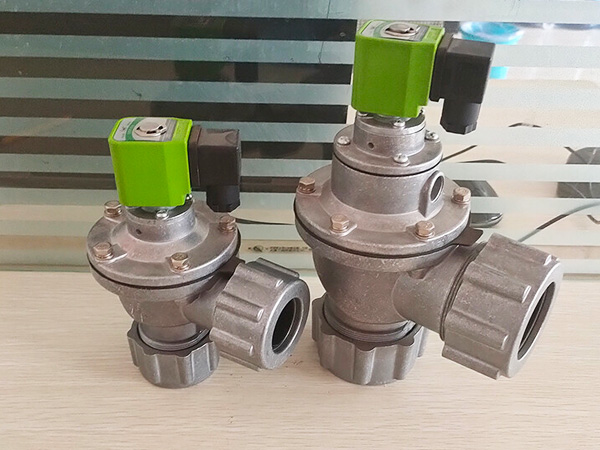
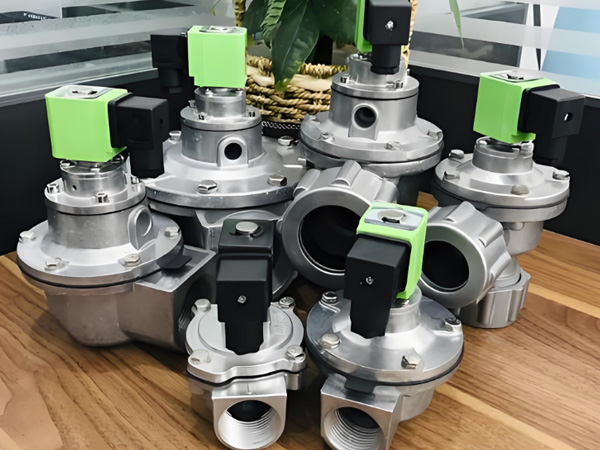
A pulse jet collector cleans on-line. A short burst of compressed air, released through a diaphragm valve and directed down a blowpipe into the top of a filter tube, travels down the inside of the bag or cartridge and flexes the media. The sudden expansion breaks the dust cake free from the inside surface, and the dislodged dust falls into the hopper below. Each cleaning pulse targets a row or group of filters while the rest of the collector keeps filtering.
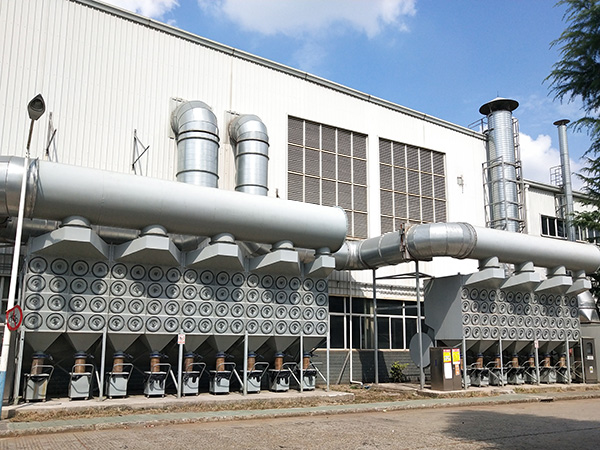
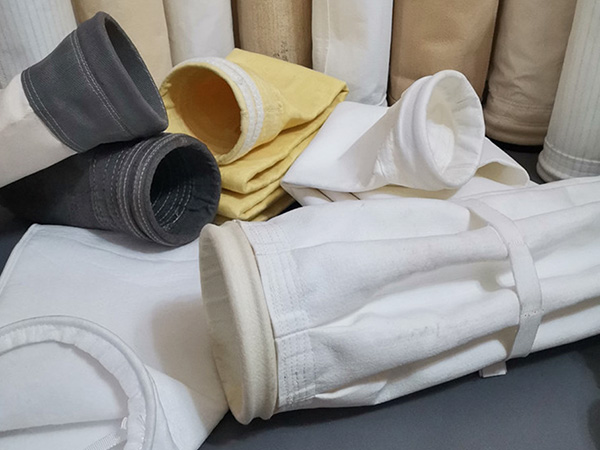
The components involved are the compressed air supply, the reservoir and manifold, the pulse jet valve and its diaphragm and solenoid, the blowpipe and nozzles, and the controller that decides when and which group to clean. The collector hardware itself — the filter housing and media — is covered in the baghouse dust collector range and the filter bag products.
What "Efficiency" Actually Means Here
For a procurement or maintenance audience, the useful measures of cleaning efficiency are practical:
Differential pressure stability — the collector holds a steady band instead of drifting upward.
Energy per unit of air cleaned — lower and more stable pressure drop means lower fan power.
Compressed air consumption — pulses cost air; fewer, better-timed pulses cost less.
Filter media life — gentle, well-targeted cleaning extends it.
Uptime — cleaning that works avoids unplanned shutdowns for bag changes or hopper problems.
None of these is improved by cleaning more aggressively. They are improved by cleaning at the right time, with the right pressure, directed at the right filters.
Factors That Govern Cleaning Effectiveness
Several variables decide whether a pulse actually clears the cake. Treating them separately helps avoid the usual mistake of just raising pressure.
Pulse pressure and reservoir volume
The cleaning pulse needs enough pressure and enough delivered volume to flex the media, but excessive pressure accelerates media wear and can drive fine dust deeper into the fabric. A stable reservoir volume matters as much as peak pressure, because a sagging air supply produces weak pulses that merely stir the cake.
Valve response and alignment
The pulse jet valve must open fully and quickly. A sticking diaphragm or a clogged blowpipe nozzle reduces the pulse energy reaching the media. Nozzle-to-bag concentricity and the correct standoff distance strongly affect how the pulse travels down the tube.
Cleaning trigger: timed versus differential-pressure based
Timed cleaning fires at fixed intervals regardless of need, which is simple but tends to over-clean during low-load periods. Differential-pressure-based cleaning fires only when the pressure drop reaches a set point, which usually reduces the total number of pulses and the compressed air used. A graduated or "demand" sequence, where more pulses are applied only as pressure rises, is a common efficiency improvement.
On-line versus off-line cleaning
On-line cleaning cleans while the collector is filtering, which is standard for pulse jet units. Where very fine or light dust re-entrains easily, short off-line cleaning of one compartment at a time can improve cake release, at the cost of slightly more complex controls.
Compressed air quality
Moisture and oil in the air stream clog nozzles, degrade diaphragms and can soil the media. A dryer, filter and drain on the cleaning air supply are low-cost items that protect a high-cost system.
Media surface and conditioning
The design of the filter media and its surface treatment affects how readily the cake releases. A media that releases cleanly needs less aggressive cleaning, which compounds the energy and life benefits.
Common Mistakes That Waste Energy
Over-cleaning — firing pulses more often than the dust load requires consumes air and abrades media.
Chasing a low pressure drop — driving the pressure drop to a minimum usually means over-cleaning and shorter media life.
Wrong or unstable pressure — too low leaves cake behind; too high wastes air and wears media.
Poor air quality — moisture and oil cause nozzle and diaphragm problems that quietly degrade cleaning.
Leaky or misaligned blowpipes — energy is lost before it reaches the media.
No pressure-drop instrumentation — without a measured signal, cleaning is run blind and almost always over-cleans.
Tuning Cleaning for Efficiency
A practical tuning sequence starts with measuring the differential pressure over a normal operating cycle. From that baseline, raise the cleaning trigger point so pulses fire only when genuinely needed, confirm the pulse pressure is within the media supplier's recommended range, and verify air quality at the manifold. Where the load varies through the day, a demand-based sequence outperforms fixed timing. The aim is a narrow, stable pressure-drop band, not the lowest possible number.
Cleaning should be reviewed together with the rest of the system. A hopper that does not discharge, an inlet that distributes flow poorly, or a fan that is oversized will all show up as higher pressure drop and tempt operators to over-clean. Fixing the root cause is cheaper than adding cleaning energy.
Maintenance of the Pulse Valves
The pulse valve itself is a low-cost item that causes outsized downtime when it fails. Routine checks cover the diaphragm for cracking or swelling, the solenoid and coil, the spring, and the strainer on the air supply. A weak or continuous leak from a valve is a direct, ongoing air loss and should be corrected promptly. Keeping the air supply dry and filtered remains the single most effective preventive measure.
Because the valves sit in a row and rarely fail simultaneously, condition-based maintenance — inspecting when pressure drop trends upward rather than replacing on a fixed calendar — usually extends both valve and media life.
FAQ
Does pulse cleaning improve the dust collector's capture efficiency?
Not directly. Capture efficiency is governed mainly by the filter media, the air-to-cloth ratio and the hood capture design. Pulse cleaning maintains performance by controlling pressure drop; if it fails, capture falls indirectly because airflow drops, but cleaning itself does not make the media "more efficient" at catching particles.
Why does my dust collector use so much compressed air?
The usual causes are timed cleaning that fires regardless of load, a cleaning pressure set too high, leaks from a failing valve diaphragm, or poor air distribution from misaligned blowpipes. Switching to differential-pressure-triggered cleaning and correcting leaks typically reduces consumption substantially.
How often should pulse jet filters be cleaned?
There is no fixed interval. The correct frequency follows the dust loading and the pressure-drop set points, so a demand-based or differential-pressure-triggered sequence is preferable to fixed timing. During low-load periods the filters may need far fewer pulses than during peak generation.
Can higher pulse pressure clean better?
Up to a point, but beyond the media supplier's recommended range higher pressure mainly increases wear and compressed air use without improving cake release. A stable supply at the correct pressure with good nozzle alignment is more effective than simply raising pressure.
What fails most often in a pulse cleaning system?
The diaphragm in the pulse valve is the most common wear item, followed by solenoid issues and air-supply contamination. Regular inspection of the diaphragm and a clean, dry air supply prevent most failures.
References
U.S. Environmental Protection Agency, Air Pollution Control Technology Fact Sheet: Fabric Filter (Baghouse), EPA Air Pollution Control Technology Fact Sheet series.
ACGIH, Industrial Ventilation: A Manual of Recommended Practice for Design, current edition.
Cooper, C.D. and Alley, F.C., Air Pollution Control: A Design Approach, Waveland Press.
National Fire Protection Association, NFPA 652: Standard on the Fundamentals of Combustible Dust, current edition.
Perry, R.H. and Green, D.W. (eds.), Perry's Chemical Engineers' Handbook, McGraw-Hill, sections on gas–solid separation and filtration.
Conclusion
The core technical point is that pulse jet cleaning does not raise particle capture — it preserves the operating condition in which capture already works. Its contribution to efficiency is measured in stable differential pressure, lower fan and compressed-air energy, longer filter media life, and fewer unplanned stoppages. Those benefits come from cleaning at the right time and pressure, not from cleaning harder.
The factors that matter most are the cleaning trigger logic, pulse pressure and reservoir stability, blowpipe alignment, compressed air quality, and a pressure-drop signal to manage it all. Mistakes such as over-cleaning, leaking valves and ignoring air quality quietly raise the cost of ownership long before they cause a shutdown.
If you are reviewing a collector that is consuming too much air or drifting in pressure drop, send us the operating data and media details. Our engineering team at Hanzhe Environmental Protection can review the cleaning configuration and suggest a tuning and maintenance plan rather than a component replacement. Related equipment is listed in the product centre.
 HOT PRODUCT
 CONTACT US