




BLOGSDETAILS
Industrial VOC Treatment: Solutions and Technologies for Factory Compliance
Author:hanzhe Time:2026-09-14 20:18:55 Click:182
What Are Industrial VOCs and Why Do Factories Need to Treat Them?
Volatile organic compounds (VOCs) are carbon-based chemicals that evaporate readily at room temperature, releasing vapors into the surrounding air. In industrial settings, these emissions originate from a wide variety of manufacturing activities: solvent-based coating and painting operations, chemical processing, resin mixing, ink printing, adhesive application, and petrochemical storage and transfer. Exposure to elevated VOC concentrations poses documented health risks — including respiratory irritation, central nervous system effects, and long-term carcinogenic concern — while atmospheric releases contribute to ground-level ozone formation and smog generation.
Regulatory frameworks such as the U.S. EPA's 40 CFR Part 60 (New Source Performance Standards) and analogous international standards impose strict limits on permissible VOC emission rates across dozens of industrial categories. Non-compliance can result in substantial penalties, operational shutdowns, and reputational damage for manufacturers supplying to environmentally conscious buyers. Understanding the available industrial VOC treatment technologies is therefore a practical necessity for any facility manager responsible for production continuity and regulatory standing.
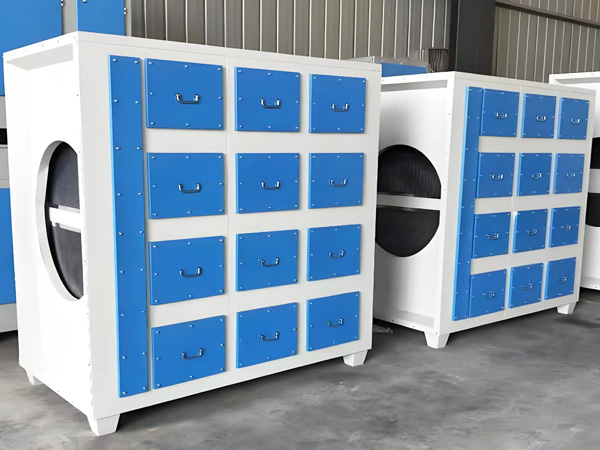
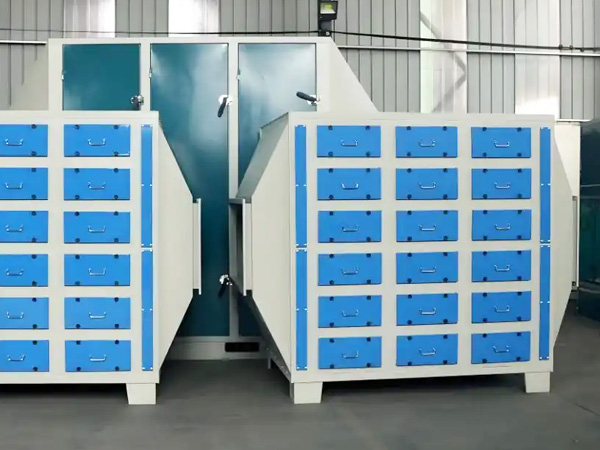
Treatment systems fall into three broad categories: destruction, recovery, and biological conversion. The choice among them depends on factors including inlet VOC concentration and variability, air volume (scfm requirements), chemical composition of the target compounds, energy availability, and desired destruction or removal efficiency (DRE).
Thermal Oxidizers
Thermal oxidizers — also called thermal incinerators — expose contaminated airstreams to temperatures typically ranging from 1,400°F to 1,800°F (760°C to 980°C) in a combustion chamber. At these temperatures, VOC molecules undergo oxidation, converting to carbon dioxide and water vapor. Thermal oxidizers achieve destruction removal efficiencies (DRE) exceeding 90% for most organic compounds when properly sized and operated.
Two primary configurations are used in industrial settings: regenerative thermal oxidizers (RTOs) and recuperative thermal oxidizers. RTOs use ceramic heat exchanger beds to preheat incoming process air using heat recovered from the oxidized exhaust stream, reducing fuel consumption to as low as 1–2% of the thermal input required by a direct-flame incinerator. This makes RTOs the preferred choice for high-volume, continuous-process applications such as coating lines, fiberglass manufacturing, and chemical plant vents.
For facilities with lower VOC concentrations or intermittent operation, regenerative catalytic oxidizers (RCOs) incorporate a catalyst bed to lower the required oxidation temperature to 600°F–900°F (315°C–480°C), improving energy efficiency and reducing operating costs.
Carbon Adsorption Systems
Activated carbon adsorption works by passing VOC-laden air through a bed of highly porous activated carbon, where organic molecules adhere to the carbon surface through Van der Waals forces. The treated airstream exits the system with substantially reduced VOC concentration. When the carbon bed becomes saturated — determined by periodic concentration monitoring — the system enters a desorption cycle in which low-pressure steam or hot nitrogen strips the accumulated VOCs from the carbon for condensation and recovery or further treatment.
Carbon adsorption is particularly effective for low-to-moderate concentration VOC streams where the target compounds have high affinity for carbon (such as aromatics, chlorinated solvents, and ketones). It is widely used in printing operations, pharmaceutical manufacturing, and batch chemical processes where VOC loadings vary significantly between production runs. The technology is modular and can be scaled by adding additional adsorption units, making it adaptable to facilities with expanding production capacity.
Biofiltration
Biofiltration employs a packed bed of organic media — such as compost, peat, or specialized synthetic media — colonized by microorganisms that metabolize VOC molecules as a food source. Process air is humidified and distributed evenly through the media bed; as VOC molecules transfer from the airstream into the biofilm, microorganisms biodegrade them into carbon dioxide, water, and biomass. Biofilters are most effective for biodegradable compounds including alcohols, aldehydes, ketones, and certain aromatics.
The principal advantages of biofiltration are its low operating cost (no high-temperature combustion, minimal energy input for fan power and media humidification) and the absence of secondary combustion byproducts. However, biofilters require careful process control to maintain consistent removal efficiency: media moisture content, pH, and temperature must be kept within defined ranges, and the system is less effective for toxic or recalcitrant compounds that inhibit microbial activity.
Selecting the Right VOC Abatement System for Your Facility
No single technology is optimal for every application. Facility managers evaluating VOC emissions control options should systematically assess the following parameters before committing to a specific system:
Inlet concentration and mass loading — measured in ppmv and lb/hr respectively — directly determines required destruction capacity and operating temperature.
Air volume (scfm) — larger volumes increase capital cost for all technologies and favor energy-efficient options like RTOs.
Compound-specific properties — halogenated and sulfur-containing compounds may poison catalysts or create corrosive byproducts in thermal oxidizers.
Recovery value — if solvent recovery has economic value, carbon adsorption with desorption may generate revenue.
Energy infrastructure — RTOs require adequate natural gas or fuel supply; facilities with limited fuel access may prefer carbon adsorption.
Permitting pathway — some jurisdictions recognize biofilters as Best Available Control Technology (BACT) for biodegradable VOC streams, simplifying permit approvals.
Maintenance Practices That Sustain VOC Treatment Performance
Regardless of technology selected, factory air purification systems require ongoing maintenance to preserve design removal efficiency over their operational lifespan. Thermal oxidizer maintenance includes periodic heat exchanger inspections for cracking or fouling, burner tune-ups, and verification of combustion temperature profiles across the chamber. Carbon adsorption systems require regular media replacement — typically every 2–5 years depending on loading — and leak testing of steam desorption piping. Biofilter media should be inspected annually for compaction, channeling, or acidification, with pH adjustment or media replacement as needed.
Applications of Industrial VOC Treatment Across Manufacturing Sectors
Industrial VOC treatment systems serve a broad spectrum of manufacturing industries. Coating and finishing operations in the automotive parts, appliance, and furniture sectors use RTOs to control solvent emissions from paint spray booths and cure ovens. The semiconductor and electronics industry deploys carbon adsorption and wet scrubbing for photoresist and cleaning solvent vapors. Composite manufacturing, where fiberglass and resin layup releases styrene and other reactive monomers, is a major application for RTO and biofilter technology. Printing and packaging facilities — particularly those using solvent-based flexographic or rotogravure processes — rely on carbon adsorption systems to capture and recover high-value ink solvents.
Conclusion
Meeting industrial VOC treatment requirements is both a regulatory obligation and a competitive differentiator for manufacturers in international supply chains. Thermal oxidizers deliver the highest destruction efficiency for high-loading, continuous-process applications; carbon adsorption offers flexibility for variable concentrations with potential solvent recovery; and biofiltration provides a cost-effective, low-energy solution for biodegradable compounds. By matching the technology to facility-specific parameters — inlet concentration, air volume, compound chemistry, and energy availability — plant managers can select a system that achieves sustained compliance while optimizing total cost of ownership.
Frequently Asked Questions
What is the most effective industrial VOC treatment technology?
The most effective technology depends on the specific application. Regenerative thermal oxidizers (RTOs) achieve 90%+ DRE across the widest range of VOC compounds and concentrations, making them the industry standard for high-volume continuous processes. However, they carry higher capital and energy costs than alternative technologies.
How much does an industrial VOC treatment system cost to operate?
Operating costs vary significantly by technology and application scale. RTO operating costs are primarily driven by fuel consumption (natural gas or propane), with energy costs ranging from $0.50 to $3.00 per 1,000 scfm of treated air depending on VOC loading and heat recovery efficiency. Carbon adsorption costs are dominated by media replacement and steam for desorption. Biofiltration has the lowest operating cost, typically limited to fan power and periodic media conditioning.
Can VOC treatment systems recover solvents for reuse?
Yes. Carbon adsorption systems with steam desorption can recover concentrated VOC streams for condensation and reuse. This is particularly common in printing and coating operations where high-value solvents such as toluene, xylene, and ethyl acetate are routinely recovered at 85–90% purity.
What regulatory standards apply to industrial VOC emissions?
In the United States, EPA 40 CFR Part 60 establishes VOC emission limits for specific industrial categories under the Clean Air Act. State-level rules such as California's South Coast AQMD Rule 1107 (coatings) and Rule 1148 (petroleum refueling operations) impose additional requirements. International manufacturers should consult EU Directive 2010/75/EU (Industrial Emissions Directive) or applicable national standards in their operating jurisdictions.
How often should VOC treatment equipment be inspected?
Most jurisdictions require annual stack testing to verify compliance with permitted emission limits. Equipment-level inspections — including burner service, media condition assessment, and continuous emission monitoring system (CEMS) calibration — should be performed quarterly or semi-annually depending on system complexity and manufacturer recommendations.
References
U.S. Environmental Protection Agency. "Control Techniques Guidelines and Alternative Control Techniques Documents — Volatile Organic Compounds." EPA-453/R-94-017, 1994.
Devinny, J.S., Deshusses, M.A., and Webster, T.S. Biofiltration for Air Pollution Control. CRC Press, 1999.
European Commission. "Best Available Techniques (BAT) Reference Document for Common Waste Gas Management and Treatment in the Chemical Sector." JRC Science for Policy Report, EUR 29936 EN, 2019.
National Renewable Energy Laboratory (NREL). "Adsorption Processes for VOC Control and Recovery in Industrial Applications." NREL/TP-5100-72140, 2020.
American Society of Heating, Refrigerating and Air-Conditioning Engineers (ASHRAE). ASHRAE Handbook — HVAC Systems and Equipment, Chapter 21: Air-Cleaning Devices and Gaseous Contaminant Control, 2020.
 HOT PRODUCT
 CONTACT US