




BLOGSDETAILS
Industrial Filter Bag Selection Guide: Materials, Sizes and Applications
Author:hanzhe Time:2026-09-24 15:17:51 Click:162
The filter bag is the single most important wear part in any baghouse dust collector. The housing, the cleaning system, the fan, and the controls all stay the same for years. The bag, by contrast, lives in a hostile environment — heat, moisture, abrasion, chemical attack, mechanical flexing — and is expected to keep filtering efficiently for as long as possible. A correctly selected industrial filter bag can deliver three to five years of service on a stable process. The wrong selection can fail in weeks, ruin product quality, or push the plant out of compliance with emission limits.
This guide is written for the engineer, the maintenance lead, or the procurement professional who has to specify or replace filter bags. It explains what a filter bag is, how it is constructed, what media are available, how to size it for the housing, and how to match the right bag to the dust, the temperature, and the chemistry of the application.
What Is an Industrial Filter Bag?
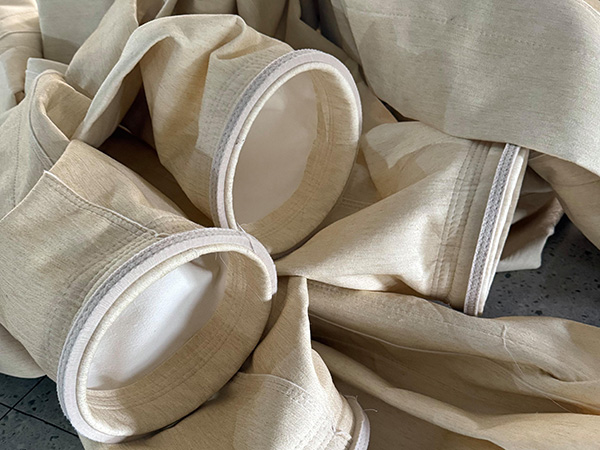
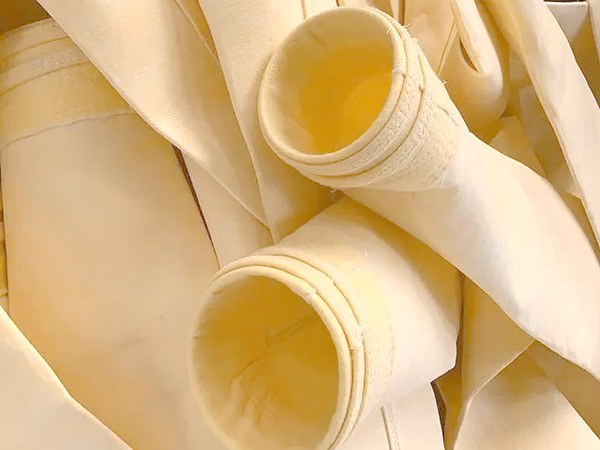
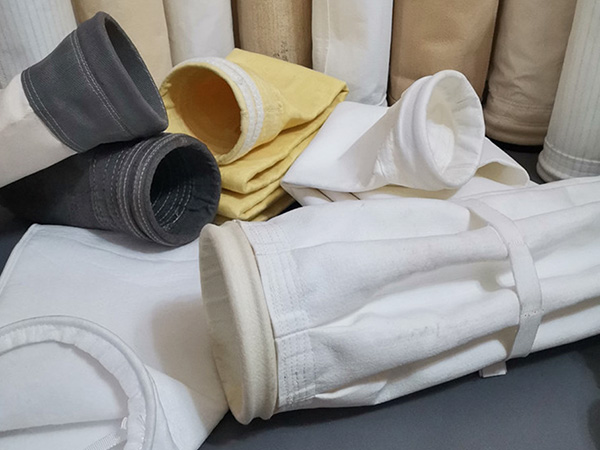
An industrial filter bag is a tubular fabric element, open at one end, installed in a baghouse with the closed end at the top of the housing and the open end clamped or snap-banded to a tube sheet. Process air flows from the outside of the bag to the inside (most pulse-jet designs) or from the inside to the outside (some reverse-air and shaker designs). Particles are retained on the upstream side of the fabric, and the cleaned air exits to the clean-air plenum.
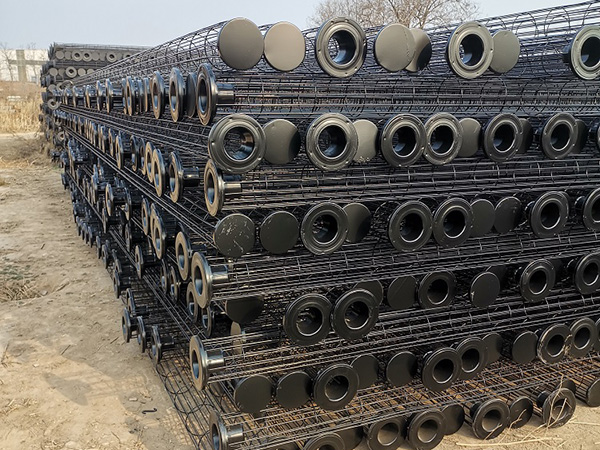
The bag is supported internally by a wire cage (also called a filter cage or bag cage) that keeps it open against the negative pressure of the airstream. The cage and the bag are mated parts: a mismatch in diameter or length will cause the bag to fold, wear early, or leak at the cuff.
How a Filter Bag Is Constructed
A filter bag is more than a tube of fabric. Each component has a purpose.
Filter Media
The fabric that does the filtering. Industrial filter media is almost always needlefelt (nonwoven) rather than woven, because felt provides much higher efficiency at a given pressure drop by trapping particles in a three-dimensional fiber matrix. Woven media are used in special applications such as high-temperature flue gas where needlefelt is not available, or in shaker baghouses with smooth-surfaced media designed to release dust easily.
Surface Treatment or Membrane
Many filter bags carry a surface treatment — a PTFE membrane, a flame-retardant finish, an antistatic treatment, an oleophobic coating, or a hydrolysis-resistant acrylic backing. The treatment modifies the surface energy of the media, controls how dust is released during cleaning, and protects the fibers from chemical attack.
Cuff or Top
The top of the bag is reinforced with a sewn or welded cuff that fits over the cage cap and the tube sheet. Common cuff styles include a snap-band, a raw edge, a steel ring, a flange top, or a stretched (cord) top. The cuff style must match the housing and the cage; a mismatch is one of the most common causes of bypass leakage at the tube sheet.
Bottom or Disk
Most pulse-jet bags are open at the bottom and held open by the cage. Some shaker and reverse-air bags are sewn closed at the bottom with a reinforced disk, which is what holds the bag in place when the top is not anchored.
Seam Construction
Needlefelt bags are made in one of two ways:
Welded construction — the felt is cut and bonded with heat or ultrasonic welding. Welded seams are smoother and leak less, and are the standard for fine-dust and high-efficiency applications.
Sewn construction — the felt is stitched with PTFE or aramid thread. Sewn construction is less expensive but creates a small pinhole pattern at the seam that can be a source of bypass leakage on the finest dust.
Common Filter Media
Media selection is the most important decision in filter bag specification. The table below summarizes the most common options, but it is worth understanding the chemistry behind each.
Polyester (PET)
Polyester is the workhorse of general-purpose filtration. It is inexpensive, has good mechanical strength, and handles continuous temperatures up to about 130 °C. It is the default choice for woodworking, grain, food, plastics, and most general industrial dust. Its main weakness is poor hydrolysis resistance: in the presence of moisture and heat, polyester breaks down. For humid or slightly wet service, an acrylic fiber is the better choice.
Polypropylene (PP)
Polypropylene has the best chemical resistance of any common filter fiber, particularly to acids and alkalis, and is unaffected by moisture. Its continuous temperature rating is the lowest of the common fibers, around 90–100 °C. It is the right choice for chemical process dust, fertilizer, and any application where moisture is a permanent feature.
Acrylic
Acrylic offers good hydrolytic stability (much better than polyester) and chemical resistance, with a continuous temperature rating around 125–140 °C. It is commonly used in asphalt, food, and chemical applications where the dust is moist or slightly acidic. Acrylic is not as mechanically robust as polyester, so it is best in stable processes with regular cleaning cycles.
Aramid (Nomex)
Aramid handles continuous temperatures up to about 200 °C and has excellent mechanical strength and abrasion resistance. It is the standard for metalworking (especially grinding and cutting), foundry dust, asphalt plants, and any application where sparks or hot particles may reach the bag. Aramid is more expensive than polyester or acrylic and is sensitive to strong acids and to UV exposure, so it is normally used with a protective surface treatment.
Polyimide (P84)
Polyimide is a high-end fiber with continuous temperature resistance around 240 °C and excellent fine-dust capture because of its irregular fiber cross-section. P84 is the standard for cement kilns, clinker coolers, waste incinerators, and coal-fired boilers. It is more expensive and more sensitive to hydrolysis than aramid, but the fine-dust performance and high-temperature margin justify the cost in demanding applications.
Fiberglass
Fiberglass with a PTFE membrane or acid-resistant finish handles continuous temperatures above 260 °C. It is the standard for very hot flue gas such as in power generation, metallurgical furnaces, and high-temperature chemical reactors. Fiberglass bags are usually sewn with PTFE thread and used with reverse-air or shaker cleaning, because they are more brittle than the felted organic fibers.
PTFE (Polytetrafluoroethylene)
PTFE is a specialty fiber with a continuous temperature rating of about 260 °C and essentially universal chemical resistance. It is used where nothing else survives — aggressive chemistry, very high temperature, or both. The cost is high, but PTFE bags routinely outlast alternative fibers by a factor of two or more in the right application.
Surface Treatments and Membranes
The base media determines the bulk of a bag's performance, but the surface finish often determines how long it lasts and how clean the exhaust stays.
PTFE membrane (ePTFE): a thin, microporous film laminated to the surface of the felt. The membrane traps particles on the surface rather than deep in the fiber matrix, which makes cleaning easier and reduces emissions. PTFE-membrane bags can reach outlet concentrations well below 10 mg/Nm³ and are the default for applications with strict emission limits.
Flame-retardant finish: a chemical treatment that reduces the propensity of the bag to ignite and propagate flame. Used where sparks or hot particles are present, often in combination with aramid or P84 media.
Antistatic treatment: conductive fibers or coatings that dissipate static charge. Required for combustible dust and increasingly specified by ATEX or NFPA standards.
Oleophobic / hydrophobic treatment: surface treatments that repel oil and water, used on welding fume, oily machining dust, and moist applications.
Acid-resistant finish: protective coatings used on fiberglass bags in acidic flue gas (e.g., coal-fired boiler exhaust).
Standard Filter Bag Sizes
Filter bags are produced in standard diameters and lengths to fit common cage sizes. The most common combinations are:
4.75 inch (120 mm) diameter × 6.5 ft (2.0 m) long — common in small and medium industrial baghouses.
4.75 inch (120 mm) diameter × 8.5 ft (2.6 m) long — common in larger pulse-jet collectors.
5 inch (127 mm) diameter × 6.5 ft (2.0 m) or 8.5 ft (2.6 m) long — similar in fit, slightly larger area per bag.
6 inch (152 mm) diameter × variable length — used in larger reverse-air and shaker baghouses, often with snap-band tops.
8 inch (200 mm) and larger diameters — for very large reverse-air and specialty collectors.
Total filter area for a single bag of 120 mm × 2000 mm is roughly 0.75 m²; for 127 mm × 2600 mm it is about 1.0 m². The number of bags and the total filter area in a collector determine its air-handling capacity for a given air-to-cloth ratio.
Matching the Bag to the Application
The right filter bag is the one that survives the operating environment with the lowest total cost per hour of service. The matrix below is a starting point, not a substitute for actual process data.
Woodworking and General Light-Duty Dust
Polyester needlefelt, optionally with a PTFE membrane or antistatic treatment, handles sawdust, sanding dust, and shavings well at temperatures below 130 °C. For very fine sanding dust or MDF, a PTFE membrane reduces emissions and extends bag life.
Cement, Minerals, and Building Materials
Polyimide (P84) or aramid (Nomex) with PTFE membrane is standard for cement kiln and mill service. High dust load and continuous operation demand a media with good fine-dust capture and high cleaning tolerance. For lower-temperature finish-mill dust, polyester with PTFE membrane is often sufficient.
Metalworking, Foundry, and Welding
Aramid (Nomex) is the standard, with surface treatments selected for sparks (flame retardant), combustible dust (antistatic), or oily fume (oleophobic). For high-temperature metal processes such as induction furnace or electric arc furnace fume, P84 or PTFE is the better choice.
Power Generation and Waste-to-Energy
PTFE membrane on fiberglass, P84, or PTFE fiber is standard. Acid-resistant finishes protect against acidic flue gas. Reverse-air or shaker cleaning is typical at this scale because of the size of the units and the value of long bag life.
Chemical, Pharmaceutical, and Food
Polypropylene is common where moisture and chemistry are aggressive. For high-temperature chemical processes, PTFE or P84 with the right surface treatment is appropriate. In food and pharmaceutical applications, food-grade finishes, sanitary construction, and traceable material certificates are often required.
Asphalt Plants
Aramid (Nomex) with a PTFE membrane or coating is the standard for hot-mix asphalt. The combination handles hot aggregate dust, light hydrocarbon vapor, and the abrasive loading from sand and fines.
How to Specify a Replacement Filter Bag
The fastest path to the right replacement is to provide the supplier with the following information:
Bag diameter and length, measured on a bag that is still in service (bags stretch with use, so the stretched length is the right reference).
Cuff style at the top (snap-band, raw edge, ring, flange, stretch).
Bottom style (open or sewn disk).
Media specification (e.g., polyester 500 g/m² with PTFE membrane).
Surface treatment (flame retardant, antistatic, oleophobic, acid resistant).
Cleaning system (pulse jet, reverse air, shaker) and cleaning pressure.
Operating temperature (continuous and peak) and gas chemistry.
Dust type, particle size, moisture, and any oil content.
Any required certifications (food contact, ATEX, NFPA, FDA).
A drawing of the existing cage with the critical dimensions — diameter, length, venturi opening, cap style, and wire count — is the most efficient way to ensure a match.
Filter Cage Compatibility
Because the bag and the cage work together, the cage must be specified alongside the bag. Key parameters are:
Diameter and length — typically 120 mm or 127 mm diameter for a 4.75" or 5" bag; the cage should be 5–10 mm smaller in diameter than the bag to keep the bag open without overstretching it.
Wire count and spacing — more wires give better support but also more wear points; typical industrial cages use 8–10 longitudinal wires.
Venturi — a throttle at the top of the cage that improves cleaning pulse efficiency. Most pulse-jet bags are designed to be used with a venturi; some modern designs omit the venturi for higher pulse efficiency.
Surface treatment — galvanized, stainless steel, or powder-coated. Stainless or galvanized is required in corrosive or high-humidity environments.
Top and bottom cap style — must match the bag's cuff and bottom construction.
Common Failure Modes and How to Avoid Them
Filter bag failure usually shows up as one of a few patterns. Knowing the pattern points to the cause.
Abrasion at the bag-to-cage contact points: the cage is bent or corroded, the bag is too loose, or dust load is high. Replace the cage and ensure the bag-to-cage fit is correct.
Hydrolysis (polyester in moist service): the bag feels soft and weak. Switch to acrylic or polypropylene, and address the source of moisture in the process.
Chemical attack: the bag is brittle or has lost strength. Identify the chemical species and switch to a compatible media (PTFE for aggressive chemicals, P84 for acid, polypropylene for many organics).
High-temperature attack: the bag is discolored, brittle, or shrunk. Check actual operating temperature against the media rating and provide for cooling or dilution air if it is too high.
Bypass at the cuff: dust streaks below the cuff or visible leakage at the tube sheet. Check the cuff style, the clamp, and the gasket. Replace the cuff if worn.
Premature blinding: pressure drop rises faster than expected and the bag will not clean. Check cleaning pressure, pulse interval, compressed air quality, and the possibility of moisture or oil contamination.
Storage and Handling
A few practical points that extend bag life on the shelf and after installation:
Store bags in their original packaging, dry, away from direct sunlight and UV sources. UV degrades polyester and aramid.
Install bags with clean gloves to avoid oil or grease transfer to the media.
Pre-cycle the cleaning system a few times after a bag change to seat the new bags against the cages.
Record the date of every bag change and the operating hours so that media life can be tracked over time and a planned change interval can be established.
Frequently Asked Questions
How long does an industrial filter bag last?
Bag life depends on the media, the operating environment, and the cleaning system. Polyester bags in a stable, dry process routinely last three to four years; aramid and P84 bags in harsher service may last one to three years; PTFE bags in very aggressive chemistry or temperature can last five years or more. The practical signal that a bag has reached end of life is rising differential pressure at a constant airflow.
Can I switch from polyester to aramid bags without changing anything else?
Generally yes for higher temperature, but check the cage and the cleaning system. Aramid bags are usually heavier and may need a stronger cage. The cleaning pulse pressure and interval may also need adjustment because aramid has a different surface energy than polyester.
What is the difference between a PTFE membrane and a PTFE fiber bag?
A PTFE membrane is a thin microporous film laminated onto a base felt (often polyester, aramid, or P84) to give the surface the easy-release and high-efficiency properties of PTFE. A PTFE fiber bag is made from spun PTFE fibers and is used at very high temperatures and in aggressive chemical environments. They are different products for different duties.
Do filter bags need to be replaced one at a time?
It depends on the cause of failure. Premature, system-wide failure (e.g., a temperature excursion, a chemistry change, a cleaning system failure) usually means replacing the full set. A small number of localized failures (cage damage, cuff wear) can be handled one bag at a time. For a planned change, replacing the full set on a schedule is the most reliable approach.
Are all 120 mm × 2000 mm filter bags interchangeable?
Dimensionally, many are. But the cuff style, the media, the surface treatment, and the cage compatibility all matter. A bag that is dimensionally correct but uses the wrong cuff will leak unfiltered air at the tube sheet and push the plant out of compliance. Always match the cuff, the media, the surface treatment, and the cage as a set.
Conclusion
An industrial filter bag is a deceptively simple component, but it lives at the intersection of chemistry, mechanics, and process engineering. The right bag — chosen for the temperature, the dust, the moisture, the chemistry, and the cleaning system — is the single most cost-effective way to extend service life, stabilize emission performance, and reduce maintenance cost in any baghouse. The wrong bag, by contrast, is the fastest way to lose all three.
For B2B buyers, the practical path to a good outcome is to keep good records of the current bag's specification and operating conditions, share that data with the supplier when reordering, and treat the cage and the bag as a matched set. A complete technical proposal — including the media grade, weight, surface treatment, cuff style, and a quoted life in the actual process — is a better signal of quality than a price-only quote.
To discuss your specific dust, temperature, and chemistry and to request a sample or a full technical proposal, contact the engineering team through the contact page or revisit the main product overview for the full range of baghouse, cartridge, and replacement parts options.
References
U.S. Environmental Protection Agency. AP-42: Compilation of Air Emissions Factors from Stationary Sources.
National Fire Protection Association. NFPA 654: Standard for the Prevention of Fire and Dust Explosions from the Manufacturing, Processing, and Handling of Combustible Particulate Solids.
ASHRAE. Standard 52.2: Method of Testing General Ventilation Air-Cleaning Devices for Removal Efficiency by Particle Size.
Cooper, C. D., & Alley, F. C. (2011). Air Pollution Control: A Design Approach (4th ed.). Waveland Press.
U.S. Department of Labor, Occupational Safety and Health Administration. Combustible Dust National Emphasis Program.
 HOT PRODUCT
 CONTACT US