




BLOGSDETAILS
How to Choose Industrial Air Filtration Equipment: A Technical Guide
Author:hanzhe Time:2026-09-05 10:14:35 Click:71
Why Air Quality Matters in Manufacturing Environments
Industrial manufacturing facilities generate a complex mix of airborne contaminants: fine particulate matter from machining and grinding, fumes from welding and thermal cutting, solvent vapors from coating and adhesive operations, and biological agents in food and pharmaceutical processing. Beyond the occupational health imperative — the Occupational Safety and Health Administration (OSHA) enforces Permissible Exposure Limits (PELs) for dozens of airborne contaminants under 29 CFR 1910.1000 — poor air quality degrades product quality, accelerates equipment wear, and increases maintenance costs. Choosing the correct industrial air filtration equipment is therefore a foundational decision for any manufacturing operation.
Understanding Filtration Efficiency Ratings
Before evaluating specific equipment types, facility managers need to understand how filter performance is measured. The two dominant rating systems are ASHRAE Standard 52.2 and the EN ISO 16890 standard for general ventilation filters, and EN 1822 for high-efficiency particulate air (HEPA) and ultra-low penetration air (ULPA) filters.
ASHRAE 52.2 reports composite average removal efficiency across three particle size ranges: 0.30–1.0 μm (coarse), 1.0–3.0 μm (fine), and 3.0–10.0 μm (macro). EN ISO 16890 classifies filters by their ability to capture particles in three size bins: ePM1 (≥1 μm), ePM2.5 (≥2.5 μm), and ePM10 (≥10 μm). HEPA filters, rated per EN 1822, must demonstrate 90% retention of 0.18 μm particles — the most penetrating particle size — and are designated H13 (90%) through H14 (99.990%).
Choosing an under-rated filter for a given contaminant profile wastes energy and risks non-compliance; over-specifying HEPA for a coarse particulate application adds unnecessary capital and operating cost.
Mechanical Media Filtration Systems
Mechanical media filtration captures particles through a combination of straining, inertial impaction, and diffusion mechanisms as air passes through a fibrous filter medium. The depth-loading design of industrial cartridge filters and bag filters accommodates high dust loadings by trapping particles throughout the media thickness rather than just on the surface, extending filter life under heavy loading conditions.
Industrial applications typically employ pleated cartridge filters rated MERV 11–MERV 16 (per ASHRAE 52.2) for general manufacturing environments, while high-temperature cartridge filters rated for continuous operation at 500°F–750°F (260°C–400°C) serve furnace and forge ventilation, metal sintering, and ceramic firing applications. For semiconductor cleanrooms and pharmaceutical manufacturing, mini-pleat HEPA modules with gel-seal or gasket-free frame designs eliminate bypass leakage and maintain ISO Class 5–7 cleanliness classifications.
Activated Carbon Adsorption Equipment
While mechanical filters excel at particle removal, they are ineffective against gases and vapors. Activated carbon filtration systems address this gap by passing air through beds of activated carbon pellets or extruded carbon blocks. The highly porous internal surface area of activated carbon — typically 800–1,500 m²/g — provides extensive adsorption sites for organic solvent vapors, odors, and certain acid gases.
Industrial carbon filtration equipment is configured either as bulk carbon beds for high air volumes (typically 2,000–20,000 cfm) or as compact carbon filter housings for point-of-use applications such as laboratory fume hoods and paint spray booths. Carbon systems are rated by their carbon mass, contact time (seconds), and breakthrough capacity for specific compounds — selecting the correct carbon grade (bituminous coal, coconut shell, or impregnated) for the target contaminants is essential to achieving rated performance.
Electrostatic Precipitators
Electrostatic precipitators (ESPs) charge airborne particles as they pass through a corona discharge zone, then collect them on oppositely charged collection plates. ESPs offer very low pressure drop at high airflow rates — typically 0.2–0.5 in. wg compared to 1.0–2.5 in. wg for HEPA filters — making them energy-efficient for high-volume applications such as utility boiler stacks, cement kilns, and steel sintering operations.
In indoor manufacturing environments, two-stage electrostatic air cleaners combine a pre-filter stage for coarse particles with an ionization and collection stage for fine and ultrafine particles. These systems are available as ceiling-mounted units, duct-insert configurations, and portable air scrubbers for temporary or localized deployment.
Critical Selection Criteria for Industrial Air Filtration Equipment
Equipment selection should follow a structured evaluation rather than defaulting to lowest capital cost. The following parameters must be established before requesting quotes:
Contaminant characterization — particle size distribution, chemical composition, and concentration (mg/m³ or ppm) of target pollutants.
Design airflow rate (cfm or m³/h) and system static pressure allowance to determine fan power requirements.
Cleanliness objective — workplace exposure limit compliance versus product quality threshold (ISO class, optical density, or microbial limit).
Operating temperature and humidity — some filter media degrade or lose efficiency at elevated temperature or high relative humidity above 80%.
Space constraints and mounting configuration — ceiling-slot, duct-insert, freestanding, or return-air grille integration.
Replacement frequency and disposal costs — media filters require scheduled replacement; contaminated carbon and HEPA filters require hazardous waste disposal under RCRA regulations.
Maintenance Requirements for Industrial Air Filtration Systems
Sustainable filtration performance depends on disciplined maintenance practices. Differential pressure gauges or manometers should be installed across all filter stages to provide real-time monitoring of loading and to trigger media replacement before pressure drop degrades fan performance or airflow falls below design specification. Failure to replace loaded filters on schedule is the most common cause of system underperformance in manufacturing facilities.
For activated carbon systems, replacement intervals are compound-specific and should be calculated based on mass loading, carbon bed contact time, and supplier-provided breakthrough curves. Carbon media that has reached its adsorption capacity will no longer remove target vapors and may begin to desorb previously captured compounds — a phenomenon known as thermal regeneration that can cause episodic odor complaints and exposure events.
Applications of Industrial Air Filtration Across Manufacturing
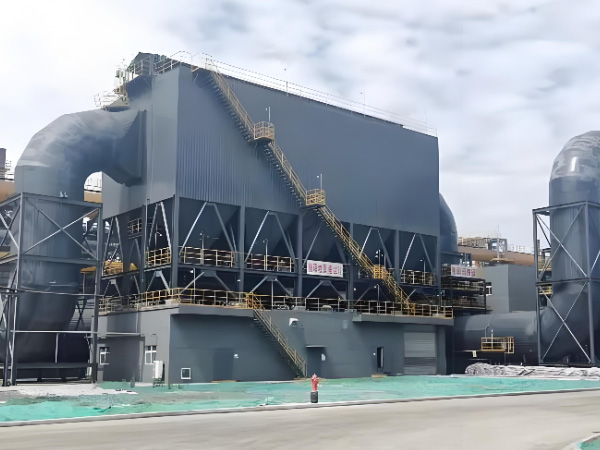
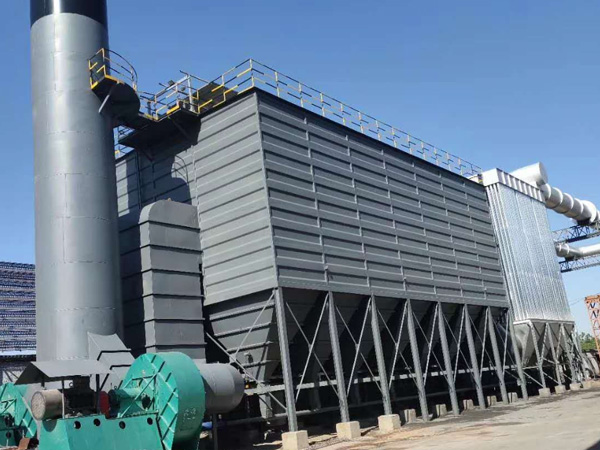
Industrial air filtration equipment serves diverse manufacturing contexts. In metal fabrication and machining, high-efficiency cartridge filters capture swarf, coolant mist, and grinding dust in wet and dry dust collector systems. The food and beverage industry uses HEPA filtration in processing areas where microbiological contamination must be controlled, such as aseptic filling lines and cold storage facilities. Pharmaceutical manufacturing employs laminar flow filtration modules in isolators and restricted access barrier systems (RABS) to maintain ISO Class 5 environments during aseptic compounding and vial filling.
Conclusion
Selecting industrial air filtration equipment is a decision with direct consequences for worker health, product quality, and regulatory compliance. The primary choice among mechanical media filtration, activated carbon adsorption, and electrostatic precipitation should be driven by the specific nature of the contaminants — particulate versus gaseous, particle size distribution, and concentration — rather than cost or convenience alone. Procurement managers who invest upfront in contaminant characterization and specification will consistently achieve better filtration performance, lower total cost of ownership, and fewer operational disruptions than those who select equipment based on catalog ratings alone.
Frequently Asked Questions
What is the difference between MERV and HEPA ratings?
MERV (Minimum Efficiency Reporting Value) ratings, defined in ASHRAE 52.2, apply to general ventilation filters and range from MERV 1 (lowest) to MERV 16 (highest). HEPA filters — rated per EN 1822 — must achieve 90% efficiency on 0.18 μm particles, substantially higher than MERV 16's typical performance of 75–90% on 0.30–1.0 μm particles. HEPA filters are required in cleanroom, pharmaceutical, and semiconductor applications where submicron particle control is critical.
How often should industrial air filters be replaced?
Replacement intervals depend on contaminant loading, filter type, and operating hours. General ventilation pre-filters (G4–MERV 8) typically require replacement every 3–6 months in heavy manufacturing environments. Pleated cartridge filters (MERV 11–MERV 16) are generally replaced every 6–18 months based on differential pressure monitoring. HEPA filters in controlled environments should be replaced every 2–3 years or when integrity testing (DOP or PAO challenge test) shows efficiency degradation below rated specification.
Can industrial air filtration equipment remove solvent vapors?
Mechanical media filters (bag, cartridge, HEPA) are not designed for vapor-phase contaminants and will not capture solvent vapors. Activated carbon adsorption is the standard technology for VOC and solvent vapor removal from industrial airstreams. The specific carbon media grade and contact time must be matched to the solvent(s) present to achieve rated removal efficiency and appropriate breakthrough time.
What is pressure drop and why does it matter?
Pressure drop — measured in inches water gauge (in. wg) or Pascals (Pa) — is the resistance that filtered air must overcome as it passes through the filter medium. Higher pressure drop increases fan power consumption and reduces effective airflow through the system. As filter media loads with captured particles, pressure drop increases over time, eventually exceeding the fan's capacity to maintain design airflow. Monitoring pressure drop is the primary maintenance indicator for all industrial filtration systems.
Are electrostatic precipitators suitable for indoor manufacturing environments?
Two-stage electrostatic precipitators are suitable for indoor use when properly maintained. However, they generate ozone as a byproduct of the corona discharge process — OSHA has set an 8-hour PEL of 0.05 ppm for ozone — and units should be selected with ozone generation below 0.020 ppm to maintain adequate safety margin. ESPs are less effective on particles below 0.30 μm and may not meet cleanroom or pharmaceutical cleanliness requirements without supplementary HEPA filtration.
References
American Society of Heating, Refrigerating and Air-Conditioning Engineers (ASHRAE). "Method of Testing General Ventilation Air-Cleaning Devices for Removal Efficiency by Particle Size." ASHRAE Standard 52.2-2017.
European Committee for Standardization. "Air filters for general ventilation — Part 1: Technical specifications, requirements and classification system based upon particle efficiency (ePM)." EN ISO 16890-1:2016.
Institute of Environmental Sciences and Technology. IEST-RP-CC001: HEPA and ULPA Filter Units, 5th Edition, 2016. https://www.iest.org/Resources/Publications/Recommended-Practices
Occupational Safety and Health Administration. "Air Contaminants, Occupational Safety and Health Standards, Subpart Z, Toxic and Hazardous Substances." 29 CFR 1910.1000.
Offen, G.R., and Turner, J.H. "Electrostatic Precipitators: Fundamentals and Applications." Journal of the Air & Waste Management Association, Vol. 46, No. 3, 1996, pp. 195–207.
 HOT PRODUCT
 CONTACT US