




BLOGSDETAILS
Custom Dust Collection Solutions for Demanding Industrial Applications
Author:hanzhe Time:2026-09-08 11:42:07 Click:139
When Standard Dust Collectors Are Not Enough
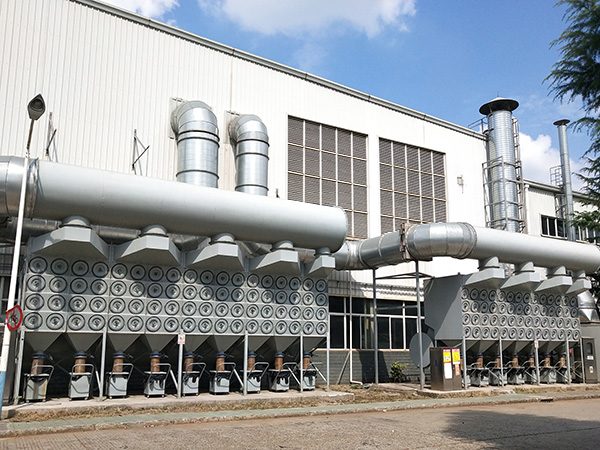
Catalog dust collectors — pre-configured units selected primarily by airflow rating — serve a wide range of general manufacturing dust collection needs effectively. However, standard equipment assumes a generic dust profile, ambient operating temperature, and non-hazardous environment that do not apply in many industrial processes. When dust properties, airstream temperature, chemical environment, or regulatory classification deviate from these assumptions, a custom dust collector engineered to the specific process conditions becomes the only reliable solution.
The consequences of deploying under-specified standard equipment in demanding applications range from premature filter failure and chronic maintenance problems to equipment damage, worker exposure incidents, and regulatory citations under OSHA's General Duty Clause or NFPA standards. Investing in a properly engineered custom dust collection design eliminates these risks and typically delivers lower total cost of ownership than repeated attempts to make standard equipment perform beyond its design envelope.
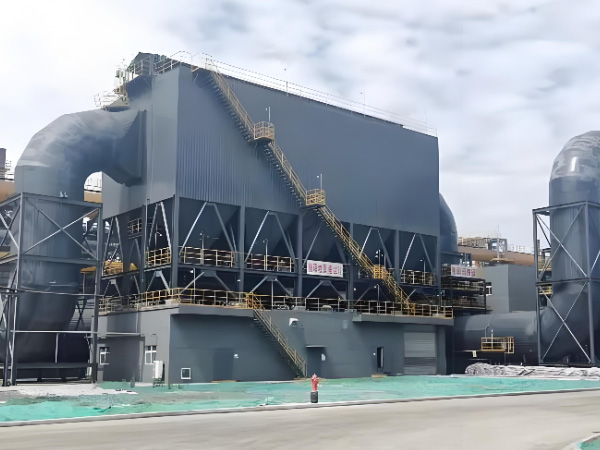
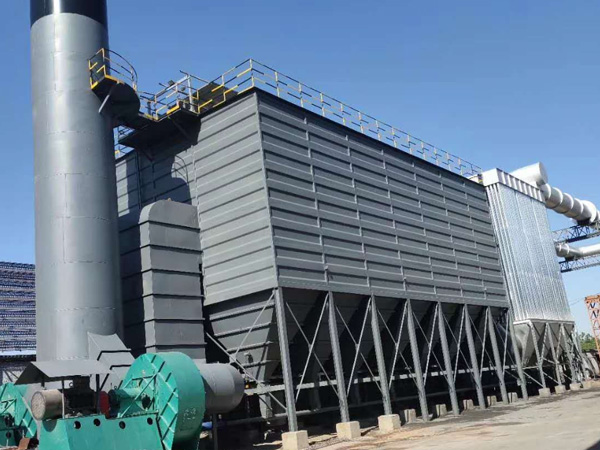
Engineering Principles Behind Custom Dust Collection Systems
A custom-engineered dust collection system addresses six primary engineering domains: air volume and pressure loss analysis, filter media specification, housing and structural design, control system architecture, explosion protection integration, and installation and commissioning documentation. Each domain involves trade-offs that experienced dust collection engineers navigate during the design phase.
Air Volume and Static Pressure Analysis
The foundation of any dust collector specification is an accurate calculation of the air volume required at each pickup point — typically expressed in cubic feet per minute (cfm) — and the total static pressure the fan must overcome to deliver that volume to the collector inlet. Static pressure losses derive from the ductwork system: straight duct runs, elbows, transitions, branch takeoffs, and the dust collector itself. Underestimating total static pressure is the single most common engineering error in dust collection system design, resulting in collectors that deliver only 60–75% of design airflow once installed.
Custom systems account for future expansion by sizing fan motors with a minimum 15% margin above calculated requirements and specifying ductwork routes that can accommodate additional pickup points without major redesign. A manufacturer who performs this analysis in-house rather than relying on customer-supplied airflow estimates demonstrates the engineering discipline that distinguishes custom dust collection solutions from catalog sales.
Filter Media Configuration
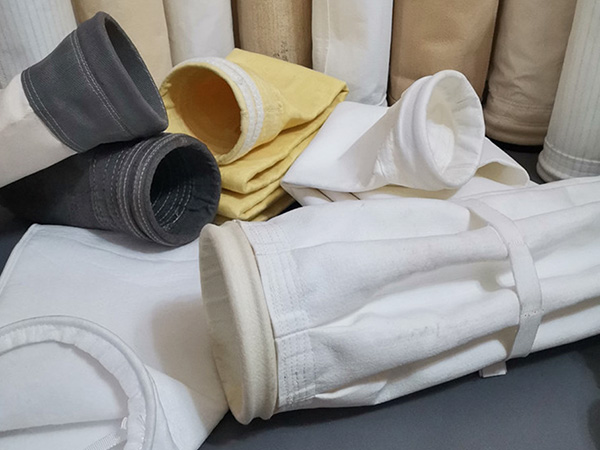
The filter medium is the functional core of the collector, and media selection for custom applications involves balancing temperature resistance, chemical compatibility, filtration efficiency, and service life against cost. Standard polyester felt is adequate for dry, non-corrosive dusts at ambient temperatures, but custom applications routinely require the following specialty media:
ePTFE (expanded PTFE) membrane media — chemically inert across the full pH range, operating to 500°F (260°C), and capable of achieving sub-micron filtration efficiency. Preferred for pharmaceutical, chemical, and food processing applications where product purity and regulatory compliance are paramount.
Fiberglass media — rated for continuous temperatures up to 750°F (400°C) in coated configurations, suitable for furnace off-gas, sintering, and ceramic process applications. Requires careful installation to prevent fiber shedding in the airstream.
Aramid (Nomex) felt — continuous duty to 400°F (204°C) with excellent abrasion resistance, used in asphalt mixing, non-ferrous metal processing, and mineral processing applications.
Stainless steel sintered media — durable, high-temperature-rated media constructed from bonded stainless steel fibers, suitable for applications where cartridge filter replacement is impractical or where aggressive pulse cleaning is required.
Housing and Structural Design
The collector housing must be engineered to withstand the combination of internal pressure, vacuum, thermal stress, and chemical exposure encountered in service. Standard light-gauge collector housings — typically 12–14 gauge carbon steel — are adequate for ambient-temperature, non-corrosive applications. Custom applications require upgraded structural specifications:
304 or 316 stainless steel construction — mandatory for food processing, pharmaceutical, and chemical manufacturing where corrosion resistance and sanitary surface finish are required. 316L stainless with 2B mill finish is the standard specification for sanitary applications.
Heavy-gauge structural steel — required for high-vacuum systems, tall baghouse configurations, and locations subject to seismic load requirements per ASCE 7-22.
Thermal insulation and jacketing — for high-temperature applications, the collector housing must be insulated to protect structural elements from thermal cycling and to maintain process temperature within design limits. Outer weather jackets prevent condensation inside the housing that could degrade filter media.
Hopper and bin design — the dust discharge hopper must be sized to ensure reliable dust evacuation without bridging or ratholing. Bin activators, vibrators, or rotating discharger plates are specified for cohesive dusts such as cement, fly ash, and certain metal oxides.
Control System Design for Custom Dust Collectors
Modern industrial dust collectors rely on programmable logic controllers (PLCs) or microprocessor-based controllers to manage the pulse-jet cleaning sequence, fan motor soft-start, and alarm annunciation. Custom collectors typically require control systems designed for the specific process interface requirements:
Fan speed control (VFD) — variable frequency drives enable fan speed — and therefore airflow — to be adjusted in response to changes in the number of active pickup points, reducing energy consumption and filter wear during low-load operation.
Differential pressure monitoring and control — continuous monitoring of filter differential pressure (clean-side to dirty-side) allows the controller to automatically adjust pulse frequency based on actual filter loading rather than fixed-time cycles, optimizing filter life and energy use.
Process interlock integration — custom collectors in critical production processes are integrated with the host process PLC via hardwired or Ethernet/IP interlocks that stop the dust collector when the process is not running, preventing unnecessary filter wear and dust resuspension during idle periods.
Remote monitoring and diagnostics — industrial IoT-enabled controllers provide real-time performance data (airflow, pressure drop, running hours, alarm history) via Modbus TCP/IP or OPC-UA to plant distributed control systems (DCS) or cloud-based monitoring dashboards.
Explosion Protection in Combustible Dust Applications
Custom dust collectors serving processes that generate combustible dusts — including aluminum, magnesium, titanium, zinc, certain plastics, biomass, and grain dusts — must be designed and constructed to comply with NFPA 654 (General) and the relevant industry-specific NFPA standard (e.g., NFPA 484 for metals, NFPA 61 for food, NFPA 664 for woodworking). A properly engineered combustible dust system includes:
Explosion venting (per NFPA 68) — sized relief panels or rupture disks that direct the expanding pressure wave safely to the exterior of the building. The vent area and static activation pressure are calculated from the dust's Kst value, Pmax, and the collector volume.
Explosion suppression systems (per NFPA 69) — fast-acting detection and chemical suppression systems that extinguish a deflagration within the collector before destructive pressure can build, used where explosion venting is impractical due to building occupancy or proximity to process equipment.
Spark detection and ablation — infrared optical detectors positioned in the dirty-air inlet duct activate suppression nozzles or pneumatic blast valves upon detecting burning particles, preventing ignition of accumulated dust within the collector.
Isolation valves — fast-acting valves in the inlet and outlet ducts close automatically upon activation of the explosion protection system, preventing flame propagation into connected ductwork and process equipment.
Conclusion
Standard dust collectors are designed for standard applications. When processes generate high-temperature airstreams, combustible dusts, corrosive chemicals, or require sanitary construction for food or pharmaceutical compliance, a custom dust collector engineered to the specific process envelope is the only reliable solution. The engineering disciplines involved — air volume and pressure analysis, filter media selection, housing materials specification, control system design, and explosion protection integration — require application expertise that only qualified manufacturers with demonstrated experience in the relevant industry can provide. Facility engineers who invest the time to develop complete process specifications and engage manufacturers in detailed technical dialogue during procurement will receive equipment that performs reliably, passes regulatory inspection, and delivers the lowest total cost of ownership over its operational lifespan.
Frequently Asked Questions
What information do I need to provide a manufacturer for a custom dust collector quote?
A complete specification should include: the type and physical properties of the dust (particle size distribution, bulk density, moisture content, abrasiveness), the airstream temperature at the pickup point, the number and type of pickup points or hoods, approximate air volume per pickup point, the chemical properties of the dust (pH, corrosiveness, reactivity), any applicable regulatory standards (NFPA, ATEX, OSHA), available electrical supply (voltage, phase, available fault current), and space constraints including available headroom and floor loading capacity.
What is the lead time for a fully custom dust collection system?
Lead times for custom dust collectors vary by complexity. Standard-configured custom collectors (custom sizing, non-standard materials, or mild explosion protection) typically require 10–14 weeks from engineering approval to shipment. Highly specialized systems — including stainless steel sanitary construction, full NFPA 69 explosion suppression systems, or high-temperature configurations rated above 750°F — may require 18–24 weeks. Verify detailed lead times and hold-points (engineering review, material procurement, factory acceptance testing) during the quotation phase.
How do I ensure the custom dust collector meets NFPA combustible dust requirements?
Engage a qualified dust collection manufacturer with documented combustible dust experience early in the specification phase. The manufacturer should conduct a dust hazard analysis (DHA) per NFPA 654 Section 4.3, determine the Kst and Pmax values for your specific dust, and size explosion protection systems accordingly. Third-party review of the DHA and equipment design by a qualified engineer (QPE) or insurance carrier engineer is recommended for high-hazard dust categories such as aluminum or magnesium.
Can custom dust collectors be retrofitted into existing ductwork systems?
Yes, but a successful retrofit requires accurate existing ductwork drawings and a static pressure survey of the current system to establish the available fan pressure budget. Custom collectors can be sized to match the existing duct configuration, but changes in airflow distribution or new pickup points will require ductwork modifications. A reputable manufacturer will perform this analysis before confirming that a retrofit is feasible or recommending a more comprehensive system redesign.
What warranty and post-installation support should I expect from a custom dust collector manufacturer?
Expect a minimum 2-year equipment warranty covering structural defects, control system components, and fan motor. The manufacturer should provide an on-site commissioning visit — typically 1–3 days depending on system complexity — to verify airflow balance, pulse-jet cleaning function, and control system operation. Spare filter element inventory recommendations, remote diagnostics capability, and annual service agreements should be discussed during procurement negotiations.
References
National Fire Protection Association. "Standard for the Prevention of Fire and Dust Explosions from the Manufacturing, Processing, and Handling of Combustible Particulate Solids." NFPA 654, 2023 Edition.
NFPA. "Standard on Explosion Prevention Systems." NFPA 69, 2022 Edition.
NFPA. "Standard on Explosion Venting Protective Systems." NFPA 68, 2018 Edition.
American Conference of Governmental Industrial Hygienists (ACGIH). "Industrial Ventilation: A Manual of Recommended Practice for Design," 30th Edition, 2019.
Institute of Electrical and Electronics Engineers. "IEEE Standard for Industrial Hardwired Process Control Systems: Safety Instrumented Systems." IEEE 603-2018.
 HOT PRODUCT
 CONTACT US