




BLOGSDETAILS
Cartridge Dust Collector: A Complete Buying Guide
Author:hanzhe Time:2026-09-21 14:44:32 Click:181
When an industrial process generates fine dust that has to be captured reliably and changed out quickly, a cartridge dust collector is often the most practical answer. Compared with a fabric baghouse, a cartridge collector delivers comparable filtration efficiency in a smaller footprint, with faster filter change-out and cleaner service. For buyers evaluating options for a new line, a retrofit, or a process upgrade, understanding the technology, the variants on the market, and the factors that drive total cost of ownership is the difference between a unit that simply works and one that delivers predictable performance for years.
This guide is written for procurement, plant engineering, and maintenance teams. It walks through what a cartridge collector is, how it works, what configurations are available, where it is the right technology choice, and what to check before signing a purchase order.
What Is a Cartridge Dust Collector?
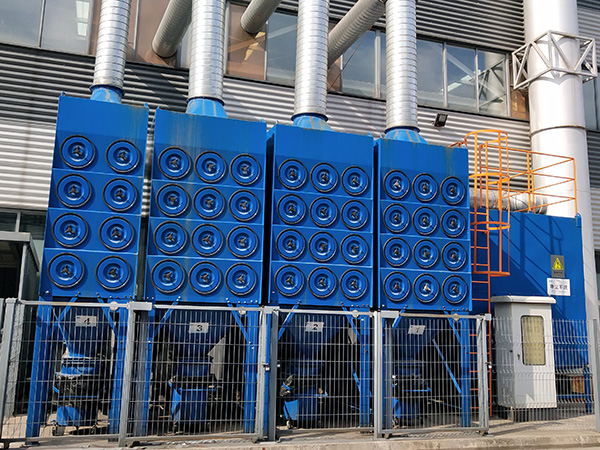
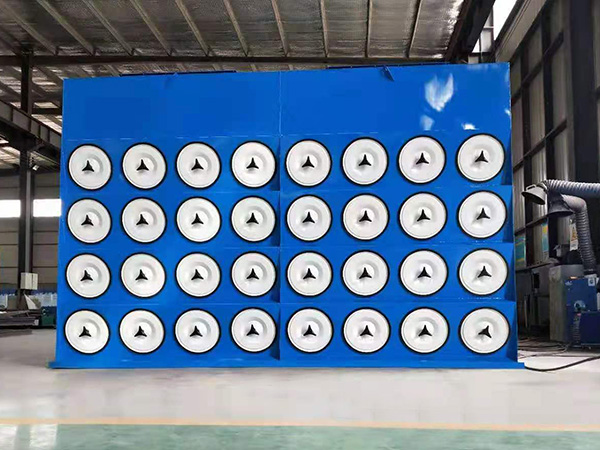
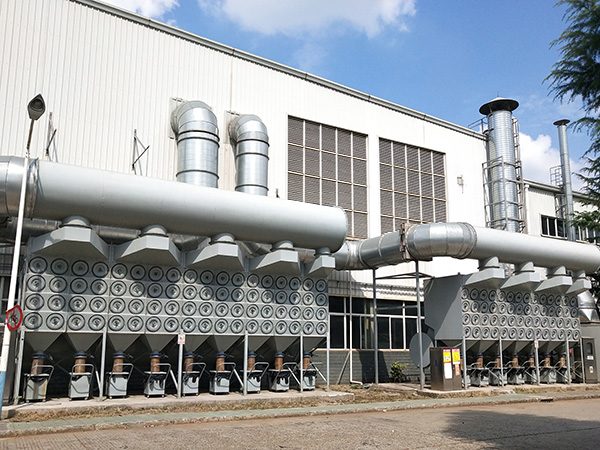
A cartridge dust collector is an industrial air filtration system that uses pleated filter cartridges — rigid, cylindrical elements with a large folded media surface area — instead of fabric bags. Dirty air enters the housing, particles are captured on the outside of the pleated media, and clean air passes through to the clean-air plenum and out the exhaust. Cleaning is typically done by a short pulse of compressed air, identical in principle to a pulse-jet baghouse but applied to a denser, more compact filter arrangement.
The defining feature is the pleated cartridge. A single 12-inch (300 mm) diameter, 26-inch (660 mm) tall cartridge can deliver 8–10 times the filter area of a traditional 6-inch (152 mm) diameter, 8-foot (2.4 m) long bag. That is why a cartridge collector of equal airflow takes roughly a quarter of the floor space of a baghouse, fits in tighter headroom, and weighs less — all useful when a plant has to add dust collection to an existing production line without breaking the building layout.
How Does a Cartridge Dust Collector Work?
The operating cycle is the same six-step pattern used by any fabric-filter collector, just compressed into a smaller envelope:
Dirty air enters the housing through a side or top inlet. Inlet baffles or diffusers spread the air evenly across the cartridge bank.
Air passes through the cartridge media. Particles are retained on the outside of the pleats while clean air flows inward to the cartridge core and up to the clean-air plenum.
A dust cake builds on the media surface. As with a baghouse, this cake actually improves filtration by trapping finer particles that the bare media would let through.
Pressure drop rises. As the cake thickens, resistance to airflow increases. A differential pressure sensor monitors this rise.
A pulse of compressed air cleans the cartridge. When pressure drop reaches a set point, a pulse jet valve fires a short burst of air through the cartridge, flexing the pleats and dislodging the dust cake.
Clean air exits through the outlet, and the dislodged dust falls into the hopper for discharge.
Because the cartridges are rigid and self-supporting, no internal cages are needed. That simplifies change-out: twist-lock, snap-band, or quick-release handles let a maintenance technician swap a single cartridge in minutes without tools, which is the single biggest operational advantage over a baghouse.
Main Components of a Cartridge Dust Collector
A cartridge collector shares most of its subsystems with a pulse-jet baghouse, but the components that touch the filter are different.
Filter Cartridges
The filter cartridge is the heart of the system. Most industrial cartridges are made of wet-laid cellulose / polyester media, spunbond polyester, or a synthetic media laminated with a nanofiber web. The nanofiber layer on the surface creates a more efficient mechanical barrier, allowing the collector to deliver MERV 13–15 efficiency (90% at 0.3 micron and above) on very fine dust.
Common cartridge configurations include:
Standard pleated cellulose/polyester — economical, suited to general-purpose dust below about 80 °C.
Spunbond polyester — better moisture resistance and longer life on humid or slightly oily dust.
Nanofiber surface treatment — surface loading instead of depth loading, easier cake release, longer life, and better efficiency on sub-micron dust.
PTFE membrane — for aggressive chemicals, high humidity, or where ultra-low emission is required.
Flame-retardant or antistatic media — for applications with combustible dust.
Housing and Cartridge Mounting
The housing is welded carbon steel with a hinged or removable clean-air plenum door. Cartridges are mounted on a tube plate or on individual mounting plates that hold the cartridge with a seal at the dirty-air / clean-air interface. Good sealing here is critical: a single bad seal leaks unfiltered air straight to the exhaust.
Pulse Cleaning System
The cleaning system includes a compressed-air manifold, pulse jet valves, a timer or differential pressure controller, and a blow pipe or nozzle that directs the pulse into each cartridge. Because the cleaning surface is denser than a bag bank, pulse valve spacing, blow pipe geometry, and pulse pressure are tuned to the specific cartridge geometry rather than copied from a baghouse layout.
Hopper and Discharge
The hopper and discharge (rotary airlock, drum, or 55-gallon pail adapter) work exactly as on a baghouse. For light, fluffy dust, a larger hopper with a smooth interior and a sealed discharge is recommended to keep the dust from re-entraining.
Fan and Controls
The fan is sized for the higher pressure drop of pleated media (typically 4–8 inches water column at end of life, vs. 3–6 for bags). Controls are typically a PLC or a dedicated pulse controller that can fire on demand based on differential pressure, on time, or both.
Types of Cartridge Dust Collectors
Cartridge collectors are usually classified by the orientation of the cartridges and how dirty air is introduced into the housing.
Downflow Cartridge Collector
Dirty air enters the top of the housing and flows downward through vertical cartridges. This is the most common arrangement for general industrial dust collection. Downflow units are compact, easy to service from the front, and handle the widest range of dust. Typical applications include welding fume, metalworking, laser and plasma cutting, powder handling, and process ventilation.
Upflow Cartridge Collector
Dirty air enters from below and flows upward through the cartridges. Upflow units are useful where the dust is very heavy and falls out of the airstream before reaching the cartridges, or where a pre-separation hopper is integrated. Upflow is less common in general industry but appears in wood, grain, and bulk material handling.
Pleated Bag Cartridge Collector
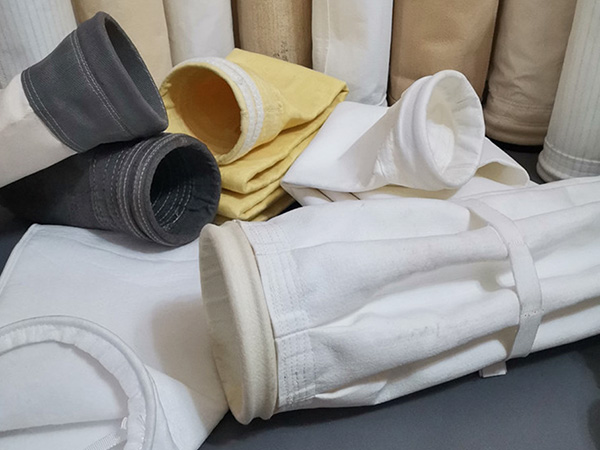
Pleated bags are a hybrid element: a traditional bag shape with a pleated media inside a rigid cage. They are usually a retrofit option, allowing a plant to upgrade a baghouse to cartridge-class efficiency without replacing the housing. This is the lowest-cost path to higher filtration efficiency on an existing collector, but the conversion is only worthwhile when the existing housing and hopper are still in good condition.
Modular and Tool-Less Collectors
Modular collectors use a small number of large cartridges (often 4 to 16 per unit) and emphasize fast, tool-less cartridge change-out. They are popular in metalworking job shops, additive manufacturing, and any process where downtime is the dominant cost driver. A single cartridge change typically takes 30–60 seconds.
Where Cartridge Dust Collectors Are Used
Cartridge collectors dominate applications where fine dust, fast change-out, or a small footprint matters. Common uses include:
Welding, plasma, and laser cutting fume: fine metal particulate, often oily, where the source capture must move with the process.
Metalworking and machining: fine grinding dust, coolant mist combined with particulate, deburring, buffing.
Powder and bulk material handling: bag dump stations, mixing rooms, transferring fine chemicals, pigments, and pharmaceuticals.
3D printing and additive manufacturing: fine metal and polymer powders, often reactive or combustible.
Food and pharmaceutical processing: where sanitary construction, smooth internal surfaces, and easy wash-down are required.
Woodworking and composites: fine sanding dust, MDF dust, fiberglass and carbon fiber dust.
Cement and building materials: finish-mill and packing-house dust where compactness is needed.
For higher-temperature gas, very heavy dust load, or very large airflow, a baghouse is usually a more economical fit. For some processes, the right answer is a hybrid: a cyclone in front of a cartridge collector, or a cartridge collector followed by a HEPA after-filter for cleanroom or indoor air return.
Key Factors When Selecting a Cartridge Dust Collector
Cartridge collectors look simple on the surface, but the wrong choice on one of the factors below can drive up operating cost by an order of magnitude over the unit's life.
Filtration Efficiency and Media
Efficiency needs to match the dust and the regulatory requirement. For general metalworking, MERV 13 / 90% at 1 micron is a sensible minimum. For applications such as pharmaceutical powders, pigment handling, or welding fume, MERV 15 or higher is appropriate. Nanofiber or PTFE membrane cartridges reach those efficiencies with a thinner, more breathable media, which translates directly to lower pressure drop and longer life.
Air-to-Media Ratio
The ratio of actual airflow to total media area (often expressed in fpm or m/min) is the key design number. Lower ratios give longer cartridge life and lower pressure drop. Common ranges:
Coarse or non-fibrous dust: 4–6 fpm (1.2–1.8 m/min)
General fine dust: 2.5–4 fpm (0.75–1.2 m/min)
Sub-micron or fibrous dust: 1.5–2.5 fpm (0.45–0.75 m/min)
Going beyond these values reduces capital cost but increases cartridge change frequency, energy cost, and the risk of emission excursions.
Dust Type and Loading
Characterize the dust before specifying the unit. Abrasive dust shortens cartridge life. Hygroscopic or sticky dust blinds cartridges quickly and may need specialty media. Oily or greasy dust (welding fume, machining coolant mist) requires an oleophobic treatment so the cartridge does not load up with oil and lose breathability.
Operating Temperature and Humidity
Standard cellulose/polyester cartridges are rated to about 80 °C. Polyester and aramid media extend this to 120–200 °C. PTFE membrane cartridges handle higher temperatures still. For wet or condensing service, a hot-air bleed or insulation of the housing is often required to keep the air above its dew point at the cartridge surface.
Cleaning System Pressure and Air Quality
Pulse-jet cartridge cleaning typically runs at 5–7 bar (80–100 psi) of clean, dry compressed air. A refrigerated or desiccant dryer on the compressed-air supply is a low-cost insurance policy. Dirty or wet air shortens pulse valve diaphragm life and can deposit contaminants on the media, raising pressure drop.
Cartridge Change-Out Design
How the cartridges are removed, what tools are required, and how much contact the technician has with the dirty side all affect maintenance cost. Top-loading collectors with hinge-down plenum doors are the easiest. Side-loading requires the technician to reach into the dirty-air side, which raises both labor cost and exposure risk.
Housing Material and Coatings
Standard construction is welded carbon steel with an epoxy or polyurethane coating. Stainless steel 304 or 316 is used for food, pharmaceutical, and corrosive applications. For outdoor installations, weatherproofing, anti-condensation insulation, and freeze protection for the air lines are worth specifying up front.
Hopper and Discharge
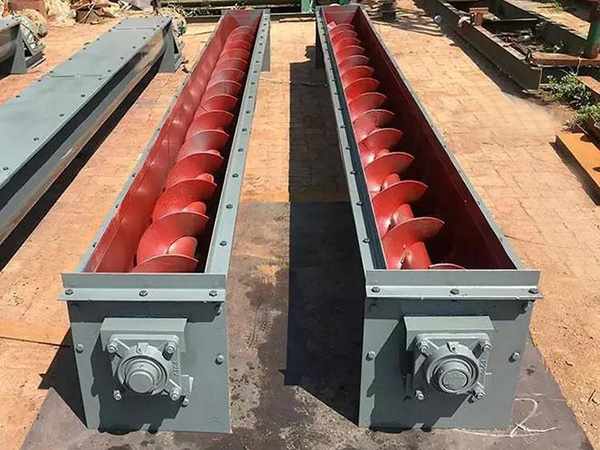
For light dust, a drum adapter or sealed 55-gallon pail is often the simplest discharge. For heavy or continuous-duty applications, a rotary airlock or screw conveyor is more appropriate. The hopper should have steep enough sidewalls to prevent bridging, with optional vibrators or air cannons for difficult materials.
After-Filtration and Recirculation
Where the cleaned air will be returned to the workspace or to a cleanroom, a HEPA after-filter (H13 or H14) is typically added downstream of the cartridge section. Where the cleaned air is exhausted to atmosphere, an after-filter is only needed if the cartridge stage alone cannot meet local emission limits.
Cartridge vs. Baghouse: When to Choose Which
Cartridge and baghouse technologies overlap, but each has a sweet spot.
Choose a cartridge collector when the dust is fine (sub-micron to a few microns), the air volume per collector is modest (a few thousand CFM or less per unit), change-out speed matters, or the available footprint is small.
Choose a baghouse when the dust is coarse, abrasive, fibrous, or high-temperature, when air volume is very high and a single large collector is preferable to many small ones, or when the lifecycle filter cost is a key driver (bags are usually cheaper per square foot of filter area than cartridges).
Consider a retrofit pleated bag when an existing baghouse is in good condition but the plant needs higher efficiency or finer dust capture without a full replacement.
A useful rule of thumb: below about 6,000 CFM (10,000 m³/h) per collector, cartridge technology is usually more cost-effective; above that, baghouses typically win on lifecycle filter cost despite the larger footprint.
What B2B Buyers Should Prepare Before Requesting a Quote
To get a properly sized proposal rather than a list price, prepare the following information:
Process description and the dust-generating point(s), with capture hood type and duct layout.
Required airflow (m³/h or CFM) and the available static pressure at the fan.
Dust type, particle size distribution, bulk density, moisture, oil content, abrasiveness, and explosibility data.
Operating temperature range at the collector inlet.
Target emission limit and applicable regulation.
Available compressed air: pressure, quality, and capacity.
Site constraints: footprint, headroom, indoor or outdoor, ambient conditions, and noise limits.
Discharge preference: drum, pail, rotary airlock, conveyor, or compactor.
Materials of construction, control system, and any required certifications (CE, ATEX, NFPA, FDA for food contact).
Submitting this information up front lets the supplier size the collector correctly, select the right media, and quote spare cartridges that match the application rather than generic catalog items.
Maintenance and Operating Cost
The total cost of a cartridge collector is driven more by filter replacement and compressed air than by the equipment purchase price. A practical maintenance plan includes:
Monitoring differential pressure trend and changing cartridges when end-of-life pressure drop is reached or when emissions begin to rise.
Inspecting the pulse cleaning system at every filter change: valves, diaphragms, blow pipes, and seals.
Replacing damaged cartridge gaskets and clamps to prevent bypass leakage.
Keeping a small on-site stock of cartridges (typically 10–20% of installed quantity) to avoid line stoppage when a single cartridge fails.
Logging each cartridge change with the date, hours of service, and the application so that media life can be tracked over time.
Plants that treat the cartridge collector as a critical asset — with planned change intervals and a small spare stock — typically see two to three years of service from a single set of cartridges. Plants that run cartridges to failure pay several times more in emergency labor and lost production.
Frequently Asked Questions
What is the difference between a cartridge dust collector and a baghouse?
Both use fabric filtration and pulse-jet cleaning. A cartridge collector uses pleated filter cartridges, which deliver much more filter area in a smaller volume and allow quick, tool-less change-out. A baghouse uses long cylindrical bags supported by cages, which is cheaper per square foot of filter area and better suited to coarse, fibrous, abrasive, or high-temperature dust at very high airflow.
How long do filter cartridges last?
Cartridge life depends on the dust, the airflow, the cleaning system, and the media. In a well-designed system on typical metalworking or welding dust, cartridges last 1.5 to 3 years. On very fine, oily, or abrasive dust, life can be 6–12 months. Rising differential pressure at a constant airflow is the practical indicator that a cartridge has reached the end of its useful life.
Can a cartridge dust collector handle combustible dust?
Yes, with proper system design. The collector should be specified with antistatic or flame-retardant media, isolation valves on the duct, explosion panels or flameless vents on the housing, and a non-sparking fan. Compliance with NFPA 654, ATEX 2014/34/EU, or the equivalent local standard is required.
Is a cartridge collector more expensive to operate than a baghouse?
The capital cost of a cartridge collector is usually similar to or higher than a baghouse of equal airflow. Operating cost depends on filter replacement: cartridges cost more per square foot of media but are often changed less frequently and in less time. For moderate airflow with fine dust, total lifecycle cost usually favors cartridge technology. For very high airflow with coarse dust, bags usually win.
What emission level can a cartridge collector achieve?
A correctly specified cartridge collector with nanofiber or PTFE membrane media can achieve outlet concentrations of 1–5 mg/Nm³, well below most regulatory limits and suitable for cleanroom return air. Real performance depends on dust characteristics, filtration velocity, and housing integrity.
Conclusion
A cartridge dust collector is the right technology when fine dust, fast change-out, or a small footprint dominates the application. The pleated cartridge delivers a much larger filter area than a fabric bag in a much smaller envelope, which is why cartridge collectors have become the default for welding fume, metalworking, laser cutting, powder handling, and many other fine-dust applications. The wrong choices — wrong media, too high an air-to-media ratio, dirty compressed air, or poor sealing at the cartridge interface — quickly turn the technology's strengths into operating liabilities.
For B2B buyers, the practical path to a successful purchase is to start with the dust and the process, then size the collector for the actual airflow with a sensible filtration velocity, select a media grade matched to the dust, and plan for cartridge change-out as a routine maintenance task rather than an emergency. A complete technical proposal — not a price-only quote — together with a clear plan for spare cartridges and on-site service, is the best protection against unexpected cost over the unit's life.
To discuss your specific application, dust characteristics, and required airflow, contact the engineering team through the contact page or revisit the main product overview to compare cartridge, baghouse, and parts options side by side.
References
U.S. Environmental Protection Agency. AP-42: Compilation of Air Emissions Factors from Stationary Sources.
National Fire Protection Association. NFPA 654: Standard for the Prevention of Fire and Dust Explosions from the Manufacturing, Processing, and Handling of Combustible Particulate Solids.
ASHRAE. Standard 52.2: Method of Testing General Ventilation Air-Cleaning Devices for Removal Efficiency by Particle Size.
Cooper, C. D., & Alley, F. C. (2011). Air Pollution Control: A Design Approach (4th ed.). Waveland Press.
Occupational Safety and Health Administration. Welding, Cutting, and Brazing – General Requirements (29 CFR 1910.252).
 HOT PRODUCT
 CONTACT US